

Maximizing Your VA Loan Benefits: Insider Tips for Getting the Most out of Your Mortgage
The VA loan program, administered by the U.S. Department of Veterans Affairs, offers a significant financial advantage to eligible service members, veterans, and surviving spouses. Understanding its intricacies and strategic applications is crucial for maximizing its benefits. This article provides practical guidance to navigate the VA loan process effectively.
Eligibility and Entitlement
Before embarking on the loan process, confirming eligibility and understanding your entitlement is paramount. This establishes the foundation for your loan journey.
Confirming Eligibility
Eligibility for a VA loan is primarily determined by service requirements. Typically, this includes:
- Active Duty Service Members: Those currently serving who have completed a minimum of 90 consecutive days of active service.
- Veterans: Individuals who have served a minimum period, which varies depending on discharge date. Generally, this is 90 days during wartime or 181 days during peacetime.
- National Guard and Reserve Members: Individuals who have served at least six years, or 90 days of active service.
- Surviving Spouses: Spouses of veterans who died in service or from a service-connected disability, provided they have not remarried (or remarried after a certain age for some circumstances).
A Certificate of Eligibility (COE) is the official document verifying your eligibility. This can be obtained online through the VA’s eBenefits portal, by mail, or through a VA-approved lender. Obtaining your COE early is a proactive step that streams the loan application later.
Understanding Your Entitlement
Your entitlement is the maximum amount the VA guarantees on your loan. This is not the maximum loan amount you can receive, but rather the portion of the loan for which the VA promises to reimburse the lender in case of default.
- Full Entitlement: Most eligible borrowers begin with full entitlement. This allows them to purchase a home without a down payment, up to the conforming loan limits established by the Federal Housing Finance Agency (FHFA) for the county in which the home is located. In some high-cost areas, these limits can exceed standard conforming limits.
- Reduced Entitlement (Second-Tier Entitlement): If you have previously used your VA loan benefit and it was not fully restored (e.g., you still own that property, or the loan was assumed by another veteran), you may have reduced entitlement. This does not preclude you from using the VA loan again, but it may require a down payment if the new home’s price exceeds a certain threshold. Calculating your remaining entitlement involves subtracting the amount of entitlement used from the current conforming limit.
It is crucial to understand your entitlement amount as it directly impacts your purchasing power and potential down payment requirements.
Leveraging Zero Down Payment
One of the most significant advantages of the VA loan is the ability to purchase a home with no down payment. This benefit can greatly reduce the financial barrier to homeownership.
Strategic Capital Preservation
The absence of a down payment requirement means you can retain your savings for other purposes. This could include:
- Emergency Fund: Maintaining a robust emergency fund is a cornerstone of financial security. A VA loan allows you to keep valuable liquid assets readily available.
- Home Improvements: Instead of depleting savings on a down payment, you can allocate funds towards immediate home improvements or renovations that enhance value or functionality.
- Post-Closing Costs: While the VA loan eliminates the down payment, there are still closing costs. Keeping funds available can cover these expenses, preventing additional financial strain at closing.
This strategic capital preservation allows for greater financial flexibility during and after the home purchase.
Maximizing Purchase Power
With no down payment, you can potentially qualify for a larger loan amount for the same out-of-pocket expense compared to conventional financing. This can translate to:
- A Larger Home: Accessing a larger loan amount opens up possibilities for homes with more square footage, additional amenities, or properties in more desirable locations.
- Better Neighborhoods: The increased purchasing power can enable you to buy in areas with better schools, lower crime rates, or appreciating property values, aligning your home purchase with long-term goals.
It is important to remember that while a no-down-payment option is attractive, ensure you are comfortable with the monthly mortgage payment associated with a larger loan amount. Debt-to-income ratios remain a critical factor for lenders.
Understanding the VA Funding Fee
The VA funding fee is a one-time fee paid directly to the Department of Veterans Affairs. It helps offset the cost of the program to taxpayers and reduces the need for general taxpayer funds.
Fee Structure and Exemptions
The funding fee amount varies based on several factors:
- Service History: First-time use or subsequent use.
- Down Payment: A larger down payment can reduce the fee.
- Loan Type: Purchase or refinance.
For example, a first-time borrower purchasing a home with no down payment typically pays a funding fee of 2.15% of the loan amount. This increases to 3.3% for subsequent uses with no down payment. With a down payment of 5% or more, the funding fee decreases.
Certain individuals are exempt from paying the VA funding fee. These include:
- Veterans receiving VA compensation for service-connected disabilities.
- Veterans who would be entitled to compensation for service-connected disabilities if they did not receive retirement pay.
- Surviving spouses of veterans who died in service or from service-connected disabilities.
- Purple Heart recipients on active duty.
It is crucial to determine if you are exempt, as this directly reduces the overall cost of your loan. If you are eligible for an exemption, ensure your COE reflects this status.
Financing the Funding Fee
The VA funding fee can typically be financed into the total loan amount. This means you do not need to pay it out of pocket at closing. While financing the fee increases your principal loan amount and, consequently, your monthly payments slightly, it preserves your savings at closing.
Consider the long-term impact of financing the fee versus paying it upfront. The additional interest paid over the life of the loan due to the financed fee might be a small price to pay for maintaining current liquidity.
Interest Rates and Lender Choice
Securing a competitive interest rate is fundamental to minimizing your long-term housing costs. The VA does not set interest rates; these are determined by individual lenders.
Shopping for Rates
The VA loan program offers competitive interest rates, often lower than conventional loans. However, these rates vary significantly between lenders. Approach the interest rate process like a market, not a single vendor.
- Multiple Lenders: Contact several VA-approved lenders (at least three to five). Each lender maintains distinct overheads, risk assessments, and pricing models, which translate to different rate offerings.
- Rate Lock Period: Understand the rate lock period offered. A longer lock period protects you from rising rates during the closing process, but some lenders may charge a higher rate for this extended protection.
- Points: Inquire about “points.” A point is 1% of the loan amount paid upfront to reduce the interest rate. Weigh the cost of points against the long-term savings in interest. Sometimes, a slightly higher rate with no points is more financially advantageous if you plan to move or refinance within a few years.
This proactive approach can save thousands of dollars over the life of your mortgage.
Understanding Lender Fees
Beyond the interest rate, lenders may charge various fees. While the VA limits some closing costs, others are permitted. Be aware of:
- Origination Fees: While VA loans prohibit some traditional origination fees, lenders can charge a flat 1% origination fee to cover their costs.
- Processing and Underwriting Fees: These fees are directly related to the administrative work involved in processing and approving your loan.
- Third-Party Fees: These include appraisal fees, title insurance, recording fees, and credit report fees. The VA has specific guidelines on who can pay for these fees. For instance, the appraisal fee must be paid by the borrower.
A detailed Loan Estimate from each lender will outline all associated costs. Compare these line by line to identify discrepancies and hidden costs. Do not hesitate to ask for clarification on any charges you do not understand.
Strategies for Refinancing and Future Use
| Topic | Insider Tips |
|---|---|
| VA Loan Eligibility | Understand the eligibility requirements and ensure you meet them before applying. |
| VA Loan Limits | Be aware of the maximum loan amount you can qualify for based on your location. |
| VA Funding Fee | Explore options to reduce or waive the funding fee, if eligible. |
| VA Loan Benefits | Take advantage of benefits such as no down payment, lower interest rates, and no private mortgage insurance. |
| VA Loan Refinancing | Consider refinancing your existing VA loan to lower your interest rate or switch from an adjustable-rate to a fixed-rate mortgage. |
The VA loan is not a one-time benefit. It offers provisions for refinancing and allows for subsequent use, providing ongoing financial flexibility.
VA Interest Rate Reduction Refinance Loan (IRRRL)
The IRRRL (often called a “Streamline” refinance) is designed to help veterans lower their interest rate or convert from an adjustable-rate mortgage (ARM) to a fixed-rate mortgage.
- Reduced Documentation: The IRRRL typically requires less paperwork and underwriting than a traditional refinance, as the VA has already guaranteed the original loan.
- No Appraisal Required: In most cases, an appraisal is not required, saving time and expense.
- Lower Funding Fee: The funding fee for an IRRRL is generally lower than for a purchase loan (typically 0.5%).
- No Cash-Out: The IRRRL is primarily for rate reduction; generally, you cannot take cash out with this program.
Monitor interest rate trends. When rates drop significantly below your current rate, an IRRRL can be a powerful tool to reduce your monthly payment and overall interest paid.
VA Cash-Out Refinance
The VA cash-out refinance allows you to borrow against your home equity. This can be used for various purposes:
- Debt Consolidation: Consolidate high-interest debts into your lower-interest mortgage payment.
- Home Improvements: Fund renovations or additions to your home.
- Major Expenses: Cover significant life events or purchases.
Unlike the IRRRL, a cash-out refinance does require an appraisal to determine your home’s current market value. The loan amount can be up to 100% of the appraised value in some instances, but this can vary by lender and current market conditions. The funding fee for a cash-out refinance is generally higher than for an IRRRL, similar to a purchase loan. Carefully weigh the benefits of accessing equity against the increased loan amount and potential resetting of your loan term.
Restoring Entitlement for Future Purchases
If you sell your home and pay off your VA loan in its entirety, you can apply to have your full VA loan entitlement restored. This allows you to use the benefit again for another home purchase with the same no-down-payment advantage (assuming you still meet eligibility criteria).
In cases where you sell your home and another eligible veteran assumes your VA loan, you may still be able to restore your entitlement, provided certain conditions are met and the VA approves the assumption. However, this is less straightforward than simply paying off the loan yourself.
Understanding these mechanisms allows you to view the VA loan not as a one-time transaction, but as a flexible financial instrument that can adapt to your evolving housing needs throughout your life. Strategic use of the VA loan can provide a substantial advantage on your path to financial stability and homeownership.
FAQs
What is a VA loan and who is eligible for it?
A VA loan is a mortgage loan program available to eligible veterans, active duty service members, and certain military spouses. It is offered by private lenders and guaranteed by the U.S. Department of Veterans Affairs.
What are the benefits of a VA loan?
VA loans offer several benefits, including no down payment requirement, competitive interest rates, no private mortgage insurance (PMI) requirement, and the ability to finance the funding fee. Additionally, VA loans have more flexible credit and income requirements compared to conventional loans.
How can I maximize my VA loan benefits?
To maximize your VA loan benefits, it’s important to understand the eligibility requirements and utilize the benefits available, such as the no down payment option and the ability to finance the funding fee. Additionally, working with a knowledgeable lender who specializes in VA loans can help you navigate the process and maximize your benefits.
What are some insider tips for getting the most out of my VA loan?
Some insider tips for maximizing your VA loan benefits include maintaining a good credit score, shopping around for the best interest rates, and considering the option to refinance a non-VA loan into a VA loan to take advantage of the benefits.
Are there any limitations or restrictions with VA loans?
While VA loans offer many benefits, there are some limitations and restrictions to be aware of. These may include the VA loan funding fee, which varies based on factors such as the type of service and whether it’s a first-time or subsequent use of the VA loan benefit. Additionally, there are limits on the amount that can be borrowed with a VA loan, which vary by county.
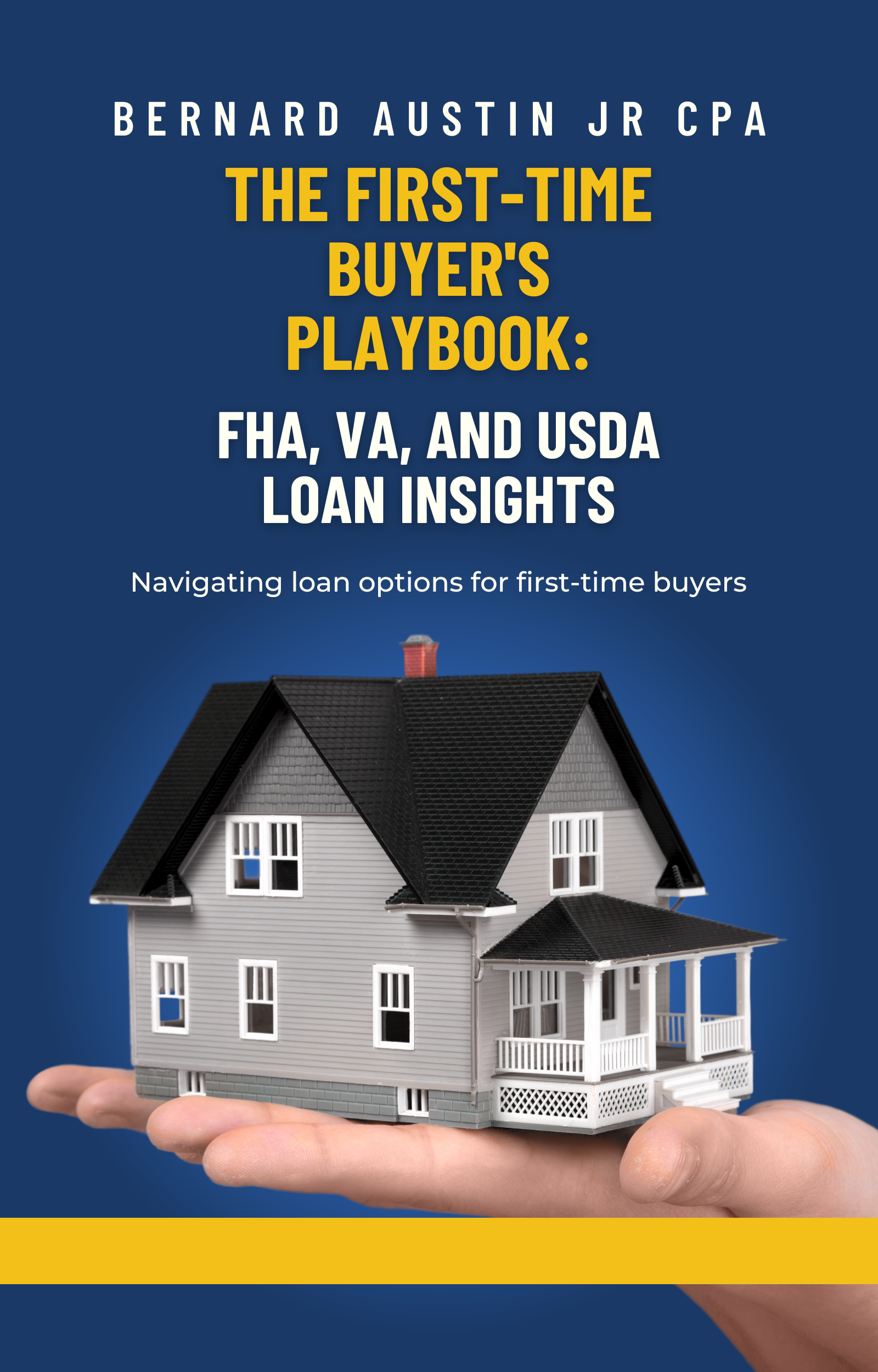
Free Guide:
First-Time Homebuyer Loans Explained
Download the free playbook that explains your options in plain English—written by a CPA and licensed Realtor.