
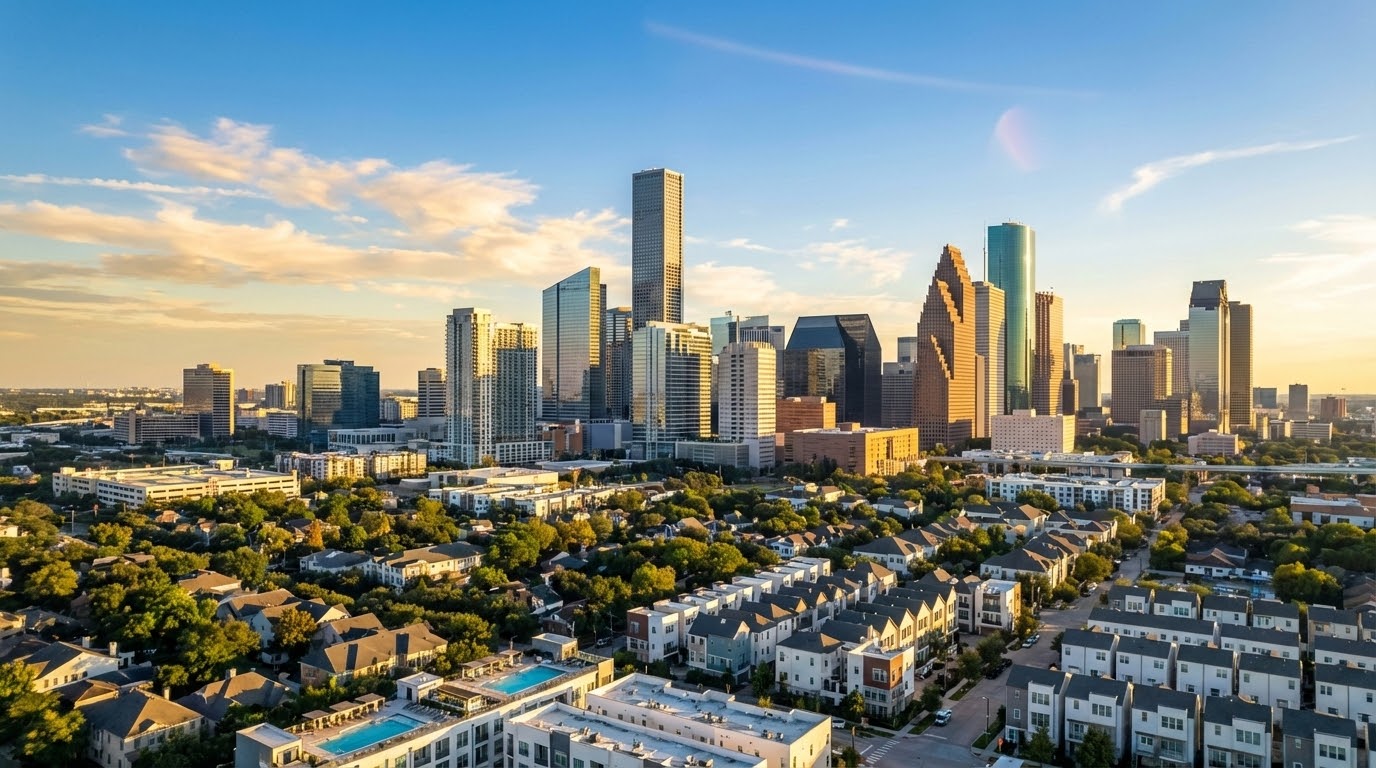
Houston Real Estate Market Trends and Forecast: What to Expect in 2026
Houston Real Estate Market Trends and Forecast: What to Expect in 2026
Introduction
The Houston real estate market has experienced significant growth over the past decade, establishing itself as one of the most dynamic and resilient markets in the United States. As we look ahead to 2026, understanding current trends and future projections becomes crucial for investors, homebuyers, and industry professionals. This article examines the key factors shaping Houston’s real estate landscape, including demographic shifts, economic conditions, supply and demand dynamics, and pricing forecasts. By analyzing historical data and current market indicators, we can develop informed expectations about what the coming years will bring. Whether you’re considering purchasing property, making investment decisions, or simply staying informed about local market conditions, this comprehensive overview will provide valuable insights into Houston’s real estate trajectory through 2026.
Market growth and demographic expansion
Houston’s real estate market has been fundamentally shaped by consistent population growth and economic expansion. The Greater Houston area continues to attract residents from across the nation, driven by competitive job opportunities, affordable living costs compared to other major metropolitan areas, and a business-friendly environment. Over the past five years, Houston has welcomed thousands of new residents annually, with projections suggesting this trend will accelerate through 2026.
The demographic profile of newcomers to Houston reveals interesting patterns that directly influence real estate demand. Young professionals between 25 and 40 years old represent a significant portion of new arrivals, particularly those working in energy, technology, healthcare, and manufacturing sectors. This demographic tends to seek urban or near-urban living spaces before transitioning to suburban single-family homes as they establish families. Additionally, Houston has seen increased migration from California and the Northeast, where high property costs have pushed residents toward more affordable markets.
The influx of remote workers has also transformed Houston’s real estate dynamics. The ability to work from home has enabled professionals to relocate from expensive coastal markets to Houston without sacrificing career opportunities. This migration pattern has particularly boosted demand in emerging neighborhoods and suburban areas that offer more space and affordability while maintaining connectivity to employment centers.
Millennials and Generation Z buyers now represent substantial purchasing power in Houston’s market. These younger buyers prioritize walkability, proximity to entertainment and dining options, and community amenities more heavily than previous generations. This preference has led to increased development activity in central Houston neighborhoods and along established transit corridors. The younger demographic’s tendency to delay homeownership compared to previous generations also means rental demand remains strong, creating opportunities for both residential and multifamily investments.
Supply constraints and development pipeline
While demand for Houston real estate continues to grow, the supply side of the equation presents a more complex picture. Despite Houston’s reputation as an unrestricted development market with relatively affordable land, several factors are creating supply constraints that will likely persist through 2026.
The availability of buildable land in desirable locations near employment centers and amenities has become increasingly limited. Developers now face longer permitting processes and more stringent environmental regulations than in previous decades. Additionally, construction costs have risen significantly due to labor shortages, increased material expenses, and supply chain disruptions that continue to affect the building industry.
Houston’s residential development pipeline shows a slowdown in single-family home construction compared to the robust activity of the early 2020s. Building permits declined from peak levels, indicating that developers have adopted a more cautious approach amid rising interest rates and construction costs. This reduced pipeline suggests that new housing supply may struggle to keep pace with demand through 2026, supporting higher appreciation rates for existing properties.
| Year | Single-family permits (thousands) | Multifamily units (thousands) | Total new housing starts (thousands) |
|---|---|---|---|
| 2021 | 58.2 | 22.1 | 80.3 |
| 2022 | 52.1 | 19.8 | 71.9 |
| 2023 | 45.3 | 18.5 | 63.8 |
| 2024 | 42.1 | 16.2 | 58.3 |
| 2025 (projected) | 40.5 | 15.8 | 56.3 |
| 2026 (projected) | 41.2 | 16.5 | 57.7 |
The multifamily sector has shown particular strength, with apartment development remaining robust despite overall housing slowdowns. However, even apartment construction has moderated from peak levels as developers complete projects initiated during the pandemic-driven work-from-home boom. The rental market has shifted from extreme supply constraints to more balanced conditions, reducing the urgency for new apartment construction in some submarkets.
Industrial and commercial real estate development presents a different picture. E-commerce growth and logistics requirements continue to drive warehouse and distribution center construction around Houston, particularly along major highway corridors. This commercial development creates indirect demand for residential real estate as it attracts workers and supports local employment growth. However, the anticipated normalization of e-commerce growth rates may slow industrial development velocity compared to recent years.
Price forecasts and investment outlook
Pricing trends in Houston’s real estate market reflect the interplay between persistent demand growth and constrained supply. After experiencing moderate appreciation in 2023 and 2024, Houston’s median home prices have shown signs of acceleration as inventory levels tightened. Current data suggests median single-family home prices in the Greater Houston area hover around the $380,000 to $410,000 range, depending on specific submarkets and property types.
Looking forward to 2026, most industry analysts project continued appreciation, though likely at a slower pace than the explosive growth witnessed between 2020 and 2022. Several factors support this outlook. First, the supply constraints mentioned previously will continue limiting the number of available properties, providing upward pressure on prices. Second, Houston’s fundamentals remain strong, with diverse employment opportunities and continued population growth. Third, mortgage rates, while higher than pandemic lows, appear to be stabilizing, potentially unlocking demand from buyers who temporarily exited the market.
However, several risks could dampen price appreciation. Economic recession would significantly impact Houston given its dependence on energy and petrochemical industries. Oil price volatility represents a substantial wildcard for the region’s economy. Additionally, if mortgage rates rise substantially above current levels, affordability constraints could emerge even in relatively affordable Houston. The widespread adoption of remote work could also modulate demand if companies accelerate return-to-office mandates, potentially reducing relocation incentives for remote workers currently moving to Houston.
For investors, Houston presents a balanced opportunity environment. Single-family rental properties continue to generate solid cash flow due to strong rental demand and relatively affordable purchase prices compared to coastal markets. Multi-family properties offer institutional-grade investment opportunities, though cap rates have compressed compared to recent years as institutional capital competes for quality assets. Commercial real estate investments in logistics and industrial properties remain attractive given supply-chain resilience and e-commerce growth, though valuation multiples have expanded.
Specific submarkets show divergent trajectories worth monitoring. The Energy Corridor area benefits from proximity to major employment centers and continued corporate relocation. The Woodlands and surrounding areas maintain strong demand due to excellent schools and planned community amenities. Inner-loop neighborhoods continue gentrification, attracting younger professionals willing to pay premiums for walkability and urban living. Meanwhile, outer suburban markets face longer commutes and less certain appreciation as remote work reduces commute premium valuations.
Interest rates, financing, and affordability challenges
The mortgage rate environment has fundamentally altered Houston’s real estate dynamics over the past two years. After reaching historic lows near 2.5% in 2021, average 30-year fixed mortgage rates climbed to the 6.5% to 7.5% range by 2024. While recent trends suggest rates may moderate somewhat by 2026, expectations of rates returning to pandemic-era lows remain unrealistic given broader economic conditions.
Higher interest rates directly impact housing affordability, particularly for first-time homebuyers who represent a crucial market segment. A buyer who could afford a $400,000 home at 3% interest rates can only afford approximately $280,000 at 7% rates, assuming identical debt-to-income ratios. Despite Houston’s reputation for affordability, this dynamic has created meaningful challenges for entry-level buyers competing with investors and wealthy relocators from expensive markets.
Houston’s median household income of approximately $68,000 creates affordability pressures in the current interest rate environment. The standard lending guideline of 28% housing expense ratios means median-income households can reasonably afford homes around $320,000 to $350,000. However, many desirable neighborhoods command median prices substantially above this threshold, particularly in established communities with excellent schools and convenient amenities. This affordability gap has implications for the types of properties experiencing strongest demand and price appreciation through 2026.
Financing innovation may partially offset affordability challenges. Alternative mortgage products, including longer-term loans and adjustable-rate mortgages, have gained traction as buyers seek ways to manage debt service. Some lenders have expanded down payment assistance programs and flexible qualification criteria, expanding access for underserved buyer populations. However, these products typically involve higher risks and costs, making them less ideal than traditional financing.
Real estate investment financing has become more selective. Banks and institutional lenders have tightened underwriting standards compared to the exuberant lending of 2021-2022. Investors now face higher interest rates, larger down payment requirements, and more rigorous property analysis. For value-add and development projects, capital availability has contracted, potentially slowing renovation activity and new construction in certain segments through 2026.
Conclusion
Houston’s real estate market heading into 2026 presents a nuanced picture of opportunity tempered by emerging challenges. The region’s strong demographic fundamentals, including sustained population growth and diverse employment opportunities, provide a solid foundation for continued market appreciation. Supply constraints resulting from reduced development activity and limited available land suggest upward price pressure will persist, though likely at more moderate rates than the rapid appreciation of 2021-2022. The market has transitioned from a supply-constrained frenzy to a more balanced environment where quality and location increasingly differentiate properties.
Investors and homebuyers should approach Houston’s market with realistic expectations about returns and appreciation rates. The days of explosive double-digit price appreciation have likely passed, but 3-5% annual appreciation appears reasonable based on fundamentals. Financing remains more expensive than during pandemic years, pushing affordability challenges despite Houston’s overall cost advantage. Specific submarkets will continue diverging based on employment dynamics, school quality, and community amenities, making location selection increasingly important for both owner-occupants and investors.
Looking specifically at 2026, expect a stabilized market with gradual price appreciation, normalized supply-demand relationships in most segments, and continued demographic tailwinds supporting long-term demand. The key to success in Houston’s real estate market through 2026 involves understanding local submarket dynamics, maintaining realistic pricing expectations, and recognizing that the market is transitioning to reward quality and location fundamentals rather than pure speculation. For those willing to conduct thorough analysis and take a measured approach, Houston continues offering compelling real estate opportunities grounded in solid economic fundamentals.

Free Guide:
First-Time Homebuyer Loans Explained
Download the free playbook that explains your options in plain English—written by a CPA and licensed Realtor.