
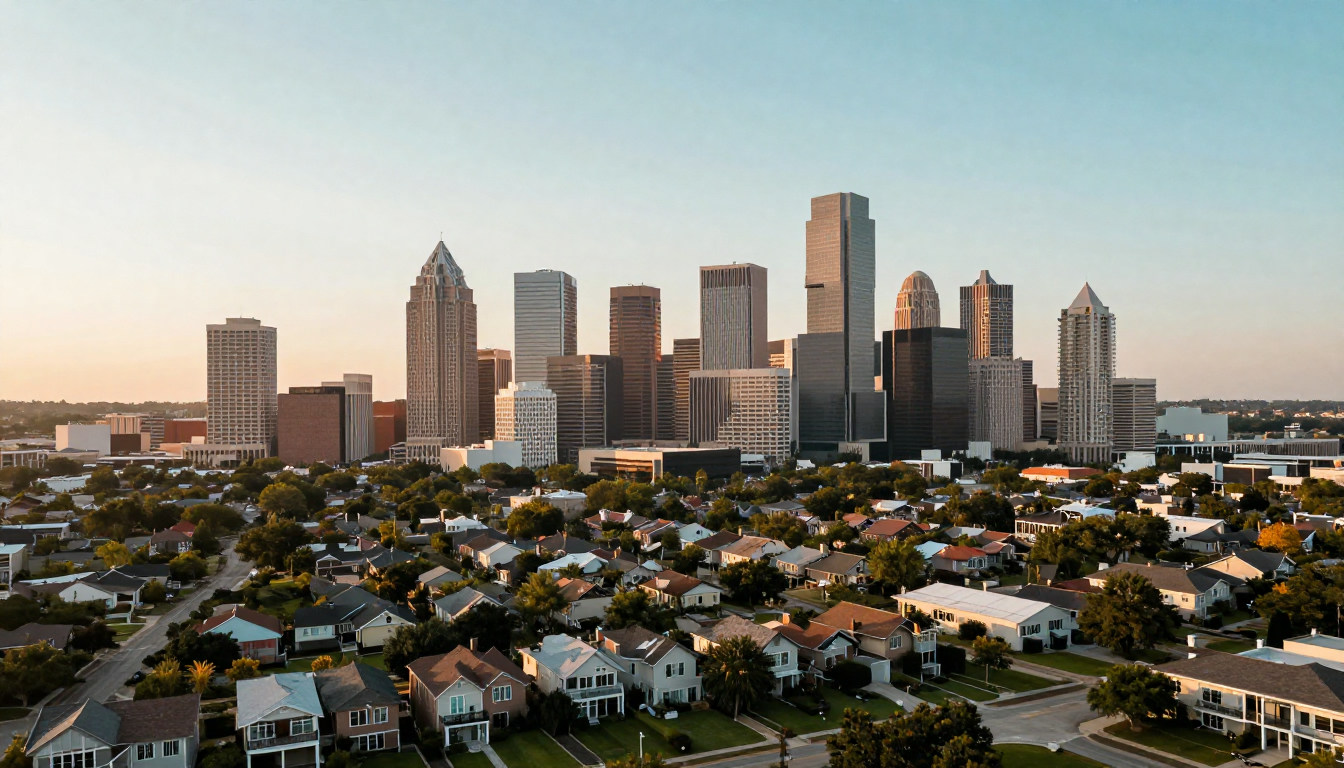
Current Trends and Forecasts in the Houston Real Estate Market
Current trends and forecasts in the Houston real estate market
Introduction
The Houston real estate market has undergone significant transformations over the past few years, driven by population growth, economic diversification, and shifting consumer preferences. As one of the largest metropolitan areas in the United States, Houston continues to attract both residential and commercial investors seeking opportunities in a dynamic and evolving landscape. Understanding the current trends and future forecasts in this market is essential for buyers, sellers, and investors looking to make informed decisions. This article explores the key market dynamics shaping Houston’s real estate sector, examines price trends and inventory levels, and provides insights into what the future may hold for this vital economic hub. By analyzing demographic shifts, commercial real estate developments, and emerging neighborhood hotspots, we can better understand where the Houston market is headed and what opportunities lie ahead for stakeholders at all levels.
Market dynamics and demographic shifts
Houston’s real estate market has been fundamentally shaped by its growing population and changing demographic composition. The city has consistently ranked among the fastest-growing major metropolitan areas in the nation, with newcomers drawn by job opportunities, affordable housing compared to coastal cities, and a lower cost of living. This influx of residents has created sustained demand for residential properties across multiple price points and neighborhoods.
The demographic profile of Houston’s new residents reveals important patterns. Young professionals in technology, healthcare, and energy sectors are increasingly relocating to the city, preferring urban core neighborhoods with walkability and proximity to job centers. Simultaneously, families seeking space and suburban amenities continue to fuel growth in outlying areas like Katy, The Woodlands, and Pearland. This bifurcated demand has created distinct market segments within the greater Houston area.
International migration has also played a crucial role in shaping the market. Houston’s diverse population, with significant communities from Latin America, Asia, and Africa, has created unique real estate dynamics. These communities often show strong preference for homeownership and tend to support long-term property value appreciation. Additionally, immigrants frequently purchase larger homes for multi-generational living arrangements, influencing the types of properties in highest demand.
Understanding these demographic shifts is essential for predicting future market trends. The composition of Houston’s population directly impacts:
- Housing type preferences and square footage requirements
- Neighborhood desirability and appreciation potential
- Commercial real estate needs and office space demands
- Infrastructure and development priorities
The continued arrival of remote workers has introduced another layer of complexity to the market. While some remote workers prefer urban living spaces with amenities and cultural attractions, others have chosen affordable suburban and exurban areas where their income goes further. This flexibility in work location has expanded Houston’s residential real estate footprint beyond traditional boundaries.
Residential pricing and inventory trends
The Houston residential market has experienced notable price appreciation, though the trajectory has differed significantly from the national average. After the pandemic-era surge in prices from 2020 to 2022, the market entered a period of stabilization and correction. Median home prices in Houston have moderated, but they remain substantially higher than they were five years prior, creating a new baseline that reflects the city’s sustained appeal.
Current market conditions show considerable variation across neighborhoods and price segments. Entry-level homes, particularly in emerging areas like Pearland, Katy, and The Woodlands suburbs, have seen slower price growth and increased inventory compared to the pre-pandemic period. This shift has improved affordability for first-time homebuyers, a significant demographic for Houston’s market. Middle-market properties, typically in the $300,000 to $500,000 range, have remained relatively stable with moderate inventory levels.
Luxury properties and waterfront homes have shown resilience, with strong demand from high-net-worth individuals and corporate relocations. Properties in prestigious neighborhoods like The Woodlands, Sugar Land, and close-in urban areas such as Montrose and the Heights continue to command premium prices. This segment has experienced less volatility and maintains healthy inventory turnover.
The following table illustrates the current pricing landscape across key Houston neighborhoods:
| Neighborhood | Median price | Price change (YoY) | Average days on market | Inventory level |
|---|---|---|---|---|
| The Woodlands | $425,000 | +2.5% | 28 | Moderate |
| Katy | $350,000 | +1.8% | 32 | Healthy |
| Pearland | $360,000 | +2.1% | 30 | Healthy |
| Montrose | $480,000 | +3.2% | 25 | Limited |
| Heights | $510,000 | +4.1% | 22 | Limited |
| Sugar Land | $440,000 | +2.8% | 26 | Moderate |
| Downtown Houston | $350,000 | +5.5% | 35 | Adequate |
Inventory levels deserve particular attention as they fundamentally shape market conditions. Houston’s inventory situation has normalized compared to 2021 and 2022, when severe shortages drove rapid price appreciation. Current inventory-to-sales ratios suggest a market closer to equilibrium, though significant neighborhood variation exists. Closer-in urban neighborhoods and established suburbs maintain tighter inventory, while newer developments on the periphery have more abundant supply.
The days-on-market metric reveals buyer preferences and market absorption rates. Properties in popular, walkable neighborhoods with strong schools and amenities sell faster, while those requiring renovation or in less desirable locations linger longer. This data point is crucial for sellers evaluating their listing prices and marketing strategies.
Rental market dynamics have also influenced purchase decisions. Rising rental rates have made homeownership increasingly attractive to renters, particularly in the entry-level market segment. However, higher mortgage rates have partially offset this advantage, creating a balanced market where neither buyers nor sellers hold overwhelming leverage.
Commercial real estate developments and economic drivers
Houston’s economic foundation, historically built on energy and petrochemical industries, continues to diversify, and the commercial real estate market reflects these structural shifts. The energy sector remains important, but healthcare, technology, aerospace, and advanced manufacturing have grown substantially. This diversification has important implications for commercial real estate demand, office space requirements, and industrial property needs.
The technology sector has emerged as a significant growth driver, with companies establishing offices and operations throughout the Houston metropolitan area. The Texas Medical Center, one of the world’s largest medical complexes, continues to expand, creating consistent demand for healthcare-related office and support facilities. Simultaneous growth in logistics and e-commerce has fueled demand for industrial and warehouse space, particularly near port facilities and transportation hubs.
Office space has experienced the most significant disruption. The shift to hybrid and remote work arrangements that accelerated during the pandemic has created excess office inventory in some areas while demand remains strong in others. Premium, modern office spaces with amenities and flexible configurations have fared well, while older, traditional office buildings have struggled with higher vacancy rates. Downtown Houston’s office market has been particularly challenged, though revitalization efforts and mixed-use developments show promise.
Retail real estate has undergone substantial transformation. Traditional enclosed shopping malls have faced continued pressure from e-commerce and changing consumer preferences, yet neighborhood retail centers and lifestyle shopping destinations have remained resilient. Houston’s strong population growth has supported new retail development, particularly in emerging suburban areas where new populations need local services.
The industrial and warehouse sector represents one of the strongest segments in Houston’s commercial real estate market. The Port of Houston, the nation’s largest port in foreign tonnage, drives consistent demand for logistics facilities. E-commerce growth, nearshoring trends, and supply chain reconfiguration have all boosted demand for modern warehouse and distribution facilities. Construction costs and land availability have moderated some expansion, but the fundamentals remain strong.
Key commercial real estate trends influencing the market include:
- Adaptive reuse of office buildings into mixed-use developments with residential components
- Development of flex spaces accommodating multiple uses and sized for various business needs
- Growth in life sciences and medical research facilities supporting healthcare innovation
- Expansion of data centers serving cloud computing and technology infrastructure needs
- Increased focus on sustainable, LEED-certified properties and energy efficiency
The relationship between residential and commercial real estate development is symbiotic. Areas attracting new businesses create employment opportunities that drive residential demand. Conversely, residential growth attracts retailers and service providers. Understanding these interconnections is essential for predicting neighborhood trajectory and investment potential.
Neighborhood evolution and emerging hotspots
Houston’s real estate market presents distinct neighborhood characteristics, each with unique advantages, challenges, and growth trajectories. Rather than uniform market conditions, Houston exhibits a mosaic of micromarkets, each responding to different economic drivers and demographic patterns.
The urban core neighborhoods, including Montrose, the Heights, Washington Avenue, and East End, have experienced sustained revitalization efforts and population growth. These areas appeal to young professionals, downsizers, and empty nesters seeking walkability and urban amenities. Property values have appreciated consistently as these neighborhoods improve infrastructure, support local businesses, and attract investment. Conversion of older industrial buildings into lofts and apartments has expanded residential options while preserving neighborhood character.
Inner-loop suburban areas like the Midtown and Uptown neighborhoods have developed as mixed-use districts with retail, office, and residential components. These neighborhoods benefit from proximity to downtown employment centers while offering lifestyle amenities and cultural attractions. Strong job growth in nearby areas has supported appreciation and low vacancy rates.
The Woodlands represents one of Houston’s most successful master-planned communities. Continuous investment in amenities, strong schools, and planned mixed-use development have made it attractive to families and corporate relocations. The community’s leadership maintains high standards and planning coordination, resulting in consistent demand and appreciation.
Katy and Pearland, both suburban communities south and southwest of Houston, have emerged as major growth centers. Population growth in these areas has been substantial, supported by new home construction, school development, and commercial growth. These communities offer affordable family homes and suburban amenities that appeal to Houston’s growing population. Investors have recognized the long-term appreciation potential, driving competition and price increases.
Emerging neighborhoods on the eastern periphery, including areas like Kingwood and Humble, represent the next wave of suburban development. These areas offer affordable entry-level homes and are benefiting from infrastructure improvements and employer relocations. Long-term appreciation potential exists, though these areas currently offer lower prices and greater inventory availability.
Downtown Houston has undergone significant transformation as developers have converted aging office buildings into residential lofts and apartments. The revitalization of Market Square, Main Street Theater District, and Buffalo Bayou Park has created new amenities and attracted younger residents. While office market challenges persist, residential growth and cultural development suggest downtown’s renewed importance to the metro area.
Each neighborhood’s evolution reflects broader market forces: demographic change, economic development, infrastructure investment, and consumer preferences. Investors and homebuyers must carefully evaluate neighborhood trajectories, considering both current conditions and future potential. Some neighborhoods represent value opportunities for patient investors willing to accept current challenges for future appreciation, while established neighborhoods command premiums based on proven desirability and sustained demand.
Conclusion
The Houston real estate market continues to demonstrate resilience and dynamism, supported by sustained population growth, economic diversification, and improving demographic trends. Current market conditions reflect a transition from the pandemic-era surge toward more sustainable levels, with moderating prices, normalized inventory, and varied conditions across neighborhoods and property types. Residential markets show particular strength in suburban communities and urban core revitalization areas, while commercial real estate adapts to structural changes in work, retail, and logistics sectors. Looking ahead, Houston’s real estate market appears positioned for continued appreciation, though growth rates will likely moderate from pandemic-era peaks. The ongoing diversification of Houston’s economy beyond energy industries provides a stronger foundation for long-term stability. Population growth will remain a critical driver, particularly as people seek affordable housing in a major metropolitan area. Investors and homebuyers should approach the market with recognition that Houston is not monolithic; neighborhood selection and careful evaluation of local conditions remain paramount. For those willing to conduct thorough research and think strategically about location and timing, Houston’s real estate market offers meaningful opportunities for wealth building and portfolio growth.

Free Guide:
First-Time Homebuyer Loans Explained
Download the free playbook that explains your options in plain English—written by a CPA and licensed Realtor.