
Understanding VA Loan Benefits and Eligibility for Texas Veterans
Understanding VA Loan Benefits and Eligibility for Texas Veterans
Texas is home to nearly 1.4 million veterans, many of whom have access to one of the most valuable financial benefits available to military service members: the VA loan program. Whether you’re a current veteran, active duty service member, or surviving spouse, understanding what VA loans offer and whether you qualify can open doors to homeownership that might otherwise seem financially out of reach. This comprehensive guide explores the essential benefits of VA loans, the eligibility requirements specific to Texas veterans, and how these benefits can help you achieve your dream of owning a home. By the end of this article, you’ll have a clear understanding of how the VA loan program works and what steps you need to take to apply.
What is a VA loan and why it matters for Texas veterans
A VA loan is a mortgage loan guaranteed by the U.S. Department of Veterans Affairs, designed specifically to help veterans, active duty members, and eligible survivors purchase or refinance homes. Unlike conventional loans, VA loans come with unique advantages that can significantly reduce the financial burden of homeownership. The program was established after World War II to help returning veterans transition to civilian life and has evolved into one of the most effective homeownership programs in the United States.
The primary distinction between VA loans and other mortgage products lies in the government guarantee. When the VA guarantees a portion of your loan, lenders are willing to offer more favorable terms because their risk is substantially reduced. This guarantee doesn’t mean the government is lending you money directly; rather, it’s backing your loan to ensure the lender can recover their investment if you default.
For Texas veterans specifically, VA loans represent a significant advantage in a competitive housing market. Texas has seen substantial population growth, and housing costs have increased considerably in major metropolitan areas like Houston, Dallas, Austin, and San Antonio. VA loans help level the playing field, allowing veterans to compete with other buyers despite rising home prices and stricter lending standards from conventional mortgage lenders.
Primary benefits of VA loans for homebuyers
VA loans offer a remarkable array of benefits that distinguish them from conventional and FHA loans. Understanding these advantages is crucial for Texas veterans considering homeownership, as they can result in substantial financial savings over the life of the loan.
No down payment requirement
Perhaps the most compelling advantage of VA loans is the zero down payment benefit. While conventional loans typically require 10 to 20 percent down payments and FHA loans require 3.5 percent, VA loans allow qualified veterans to purchase a home with absolutely no money down. This eliminates one of the biggest barriers to homeownership: accumulating a substantial down payment. For a $300,000 home in Texas, this means eligible veterans save between $10,500 and $60,000 compared to conventional financing options.
No private mortgage insurance
Private mortgage insurance, or PMI, is an additional monthly cost that lenders require when borrowers put down less than 20 percent on a conventional loan. For many veterans, PMI represents hundreds of dollars in annual expenses. VA loans eliminate this requirement entirely, regardless of your down payment amount. This directly translates to lower monthly mortgage payments and significant long-term savings.
Competitive interest rates
Because the VA backs the loan, lenders view VA borrowers as lower-risk clients and typically offer interest rates that are competitive with or better than conventional loan rates. In many cases, VA loan rates are lower than what borrowers would receive through conventional financing. Over a 30-year mortgage, even a difference of 0.25 to 0.5 percent in interest rate can result in tens of thousands of dollars in savings.
Limited closing costs
The VA sets maximum allowable fees and limits what sellers and lenders can charge. Additionally, sellers can pay for some of your closing costs, which further reduces your out-of-pocket expenses. This regulatory oversight protects veterans from excessive fees that are sometimes found in other loan products.
No prepayment penalties
VA loans allow you to pay off your loan early without facing any penalties. If you decide to make extra payments toward principal or refinance your loan, you can do so freely. This flexibility can help you build equity faster and potentially save thousands in interest expenses.
Loan assumption ability
If you later sell your home, a qualified buyer can assume your VA loan and take over the existing terms. This can be an attractive selling point, particularly in markets where interest rates have risen, as the buyer assumes your lower rate.
Eligibility requirements for Texas veterans
While VA loans offer substantial benefits, not everyone qualifies. Understanding the specific eligibility requirements is essential before pursuing this financing option. Eligibility is primarily based on military service history, character of discharge, and length of service.
Service requirements
To qualify for a VA loan, you must meet minimum service requirements. The specifics depend on when you served. Generally, active duty service members must have served for at least 90 consecutive days on active duty during wartime or 181 days during peacetime. If you served after September 7, 1980, these service requirements apply. For those who served in the National Guard or Reserves, you typically need six years of service to qualify.
However, some service members who served on active duty but were discharged due to a service-connected disability may qualify regardless of service length. Similarly, Medal of Honor recipients and their authorized family members receive VA loan eligibility.
Character of discharge
Your discharge status significantly impacts eligibility. You must have received a discharge status of honorable, general under honorable conditions, or other than dishonorable to qualify. Veterans who received dishonorable discharges or bad conduct discharges are typically ineligible. If you’re uncertain about your discharge status, you can obtain your Certificate of Release or Discharge from Active Duty (DD 214) to verify.
Current service members
Active duty service members can apply for VA loans before separation if they meet the service requirements outlined above. They’ll need their commanding officer’s approval to access VA benefits while still in service.
Surviving spouses and family members
In some cases, surviving spouses of veterans can access VA loan benefits. If your veteran spouse died in service or from a service-connected disability, you may qualify. Additionally, if your spouse was rated with a service-connected disability but the disability wasn’t the cause of death, you might still be eligible under certain circumstances.
Establishing your Certificate of Eligibility
To apply for a VA loan in Texas, you’ll need to obtain a Certificate of Eligibility, or COE. This official document proves to lenders that you meet the VA loan requirements. You can apply for your COE through the VA website, by mail, through your lender, or in person at a VA regional office. The process is straightforward and usually completes within several days.
| Service Category | Minimum Service Requirement | Eligible? |
|---|---|---|
| Active Duty (Wartime post-Sept 7, 1980) | 90 consecutive days | Yes |
| Active Duty (Peacetime post-Sept 7, 1980) | 181 consecutive days | Yes |
| National Guard or Reserve (post-Dec 31, 1987) | 6 years of service | Yes |
| Service-connected disability discharge | Any length of service | Yes (with disability) |
| Medal of Honor recipient | Not applicable | Yes |
VA loan entitlement and funding fees
Understanding VA loan entitlement and funding fees is crucial for Texas veterans planning to use this benefit. These concepts directly affect your buying power and the costs associated with obtaining a VA loan.
What is VA loan entitlement
VA loan entitlement refers to the maximum amount the VA will guarantee on your behalf. This isn’t the same as the loan amount you can borrow; rather, it’s the guarantee the VA provides to the lender. Currently, the VA guarantees up to 25 percent of the loan amount or $726,200, whichever is less. However, with this guarantee backing you, many lenders will approve loans without requiring a down payment, even for amounts exceeding the entitlement limit.
Your entitlement can be used multiple times during your lifetime. If you’ve already used your entitlement on a previous home and have paid off that loan, your entitlement typically restores, allowing you to use it again on another property. Some veterans can use their entitlement more than once simultaneously if they purchase multiple properties, though this is less common.
Funding fee structure
Most VA loans require a funding fee, which is a one-time charge paid to the VA to help offset the cost of the program. This fee is not charged by the lender but rather by the VA itself. The funding fee can be paid upfront at closing or rolled into your loan amount. The fee percentage varies based on several factors:
- Loan purpose: Purchase loans, cash-out refinances, and other refinances have different fee structures
- Down payment amount: Those putting down 5 to 9 percent pay a higher percentage than those with zero down
- First-time use versus subsequent use: First-time users generally pay lower fees than those using their entitlement for a second or subsequent time
- Active duty status: Active duty members may pay different rates than veterans
For a first-time homebuyer using a VA purchase loan with no money down, the funding fee is typically 2.3 percent of the loan amount. For subsequent uses, the fee increases to 3.6 percent. However, certain veterans are exempt from paying a funding fee entirely, including those with service-connected disabilities rated by the VA and surviving spouses of veterans who died in service or from service-connected disabilities.
Calculating your actual costs
On a $300,000 home purchase in Texas with no money down, a first-time VA buyer would pay approximately $6,900 in funding fees ($300,000 x 2.3 percent). If you choose to roll this into your loan, it increases your total mortgage amount but provides the advantage of not requiring cash at closing. Conversely, if you pay the funding fee upfront, you’re not adding to your monthly mortgage payment.
Applying for a VA loan in Texas and next steps
Once you’ve confirmed your eligibility and understand the benefits and costs associated with VA loans, the application process is straightforward. Here’s what Texas veterans need to know about moving forward with a VA loan application.
Preparing your documentation
Before approaching a lender, gather essential documents that will be required during the application process. You’ll need your Certificate of Eligibility, valid government-issued identification, Social Security number, employment history for the past two years, income documentation such as recent pay stubs and tax returns, information about existing debts and liabilities, and details about the property you’re planning to purchase. Having these documents organized in advance streamlines the application process significantly.
Finding a VA-savvy lender
While most major banks and mortgage lenders offer VA loans, it’s beneficial to work with lenders experienced in VA financing. These lenders understand VA-specific requirements, can navigate the unique aspects of VA loans, and often provide better customer service to veterans. Many credit unions, regional banks, and national mortgage companies specialize in VA loans and actively market to Texas veterans.
The application and approval process
The VA loan application process typically mirrors conventional mortgage applications. You’ll complete a loan application, provide financial documentation, and the lender will order an appraisal and run a credit check. One significant advantage is that VA loans are often more flexible regarding credit scores. While conventional loans might require a 620 credit score, some VA lenders work with borrowers having lower scores, though rates may be less favorable.
The VA appraisal process differs slightly from conventional appraisals. VA appraisers are specifically trained to evaluate properties for VA loans and ensure they meet VA minimum property requirements. These requirements protect veterans by ensuring the property is safe, sound, and worth the purchase price. If a property fails to meet VA standards, the seller must make repairs before the loan can proceed.
Considerations specific to Texas
Texas veterans should be aware of state-specific factors that may affect their VA loan experience. Texas has no state income tax, which can positively impact your debt-to-income ratio. Additionally, Texas property laws, homestead exemptions, and local market conditions in major Texas cities like Houston, Dallas, Austin, San Antonio, and Fort Worth may influence your home buying experience. Some Texas lenders have specific programs tailored to the Texas veteran community and may offer additional incentives or benefits.
As you prepare to apply, consider getting pre-approved before house hunting. Pre-approval provides a clear picture of your buying power and shows sellers you’re a serious, qualified buyer. In competitive Texas markets, this can be advantageous when making offers.
Conclusion
VA loans represent a transformative financial tool for Texas veterans seeking homeownership. With benefits including zero down payments, no private mortgage insurance, competitive interest rates, and limited closing costs, these loans remove significant barriers that might otherwise prevent veterans from achieving the dream of home ownership. The eligibility requirements, while specific, are straightforward to verify through your Certificate of Eligibility. Understanding VA loan entitlement and funding fees helps you calculate accurate costs and plan your finances accordingly. As you move forward with a VA loan application in Texas, ensure you’re working with experienced lenders who understand the nuances of VA financing and can guide you through each step. The combination of superior loan terms and the flexibility that VA loans offer makes them an exceptional resource for the nearly 1.4 million Texas veterans. Whether you’re purchasing your first home or using your restored entitlement for another property, the VA loan program stands ready to support your homeownership goals. Take advantage of this earned benefit and start building wealth through real estate today.
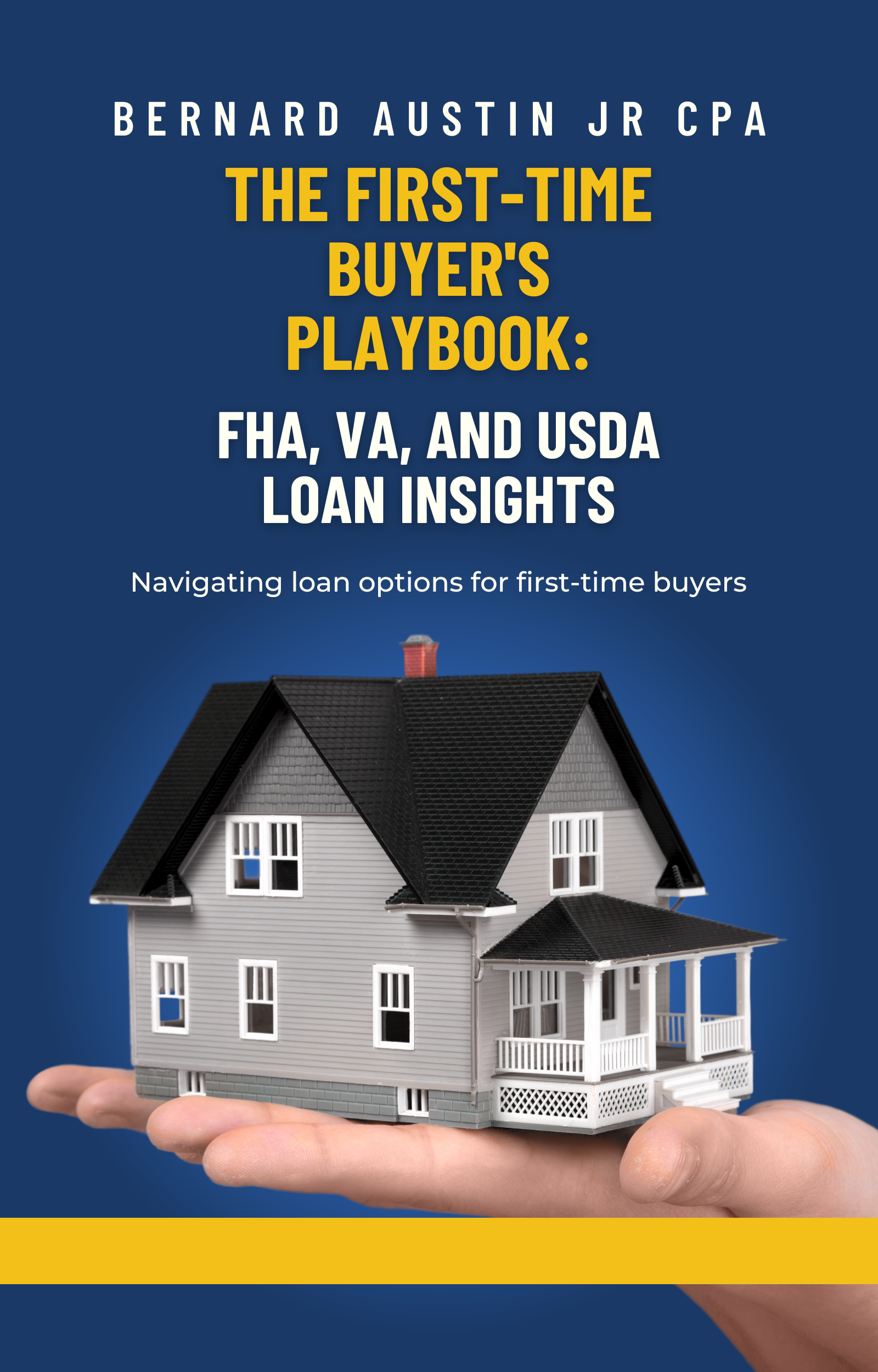
Free Guide:
First-Time Homebuyer Loans Explained
Download the free playbook that explains your options in plain English—written by a CPA and licensed Realtor.