
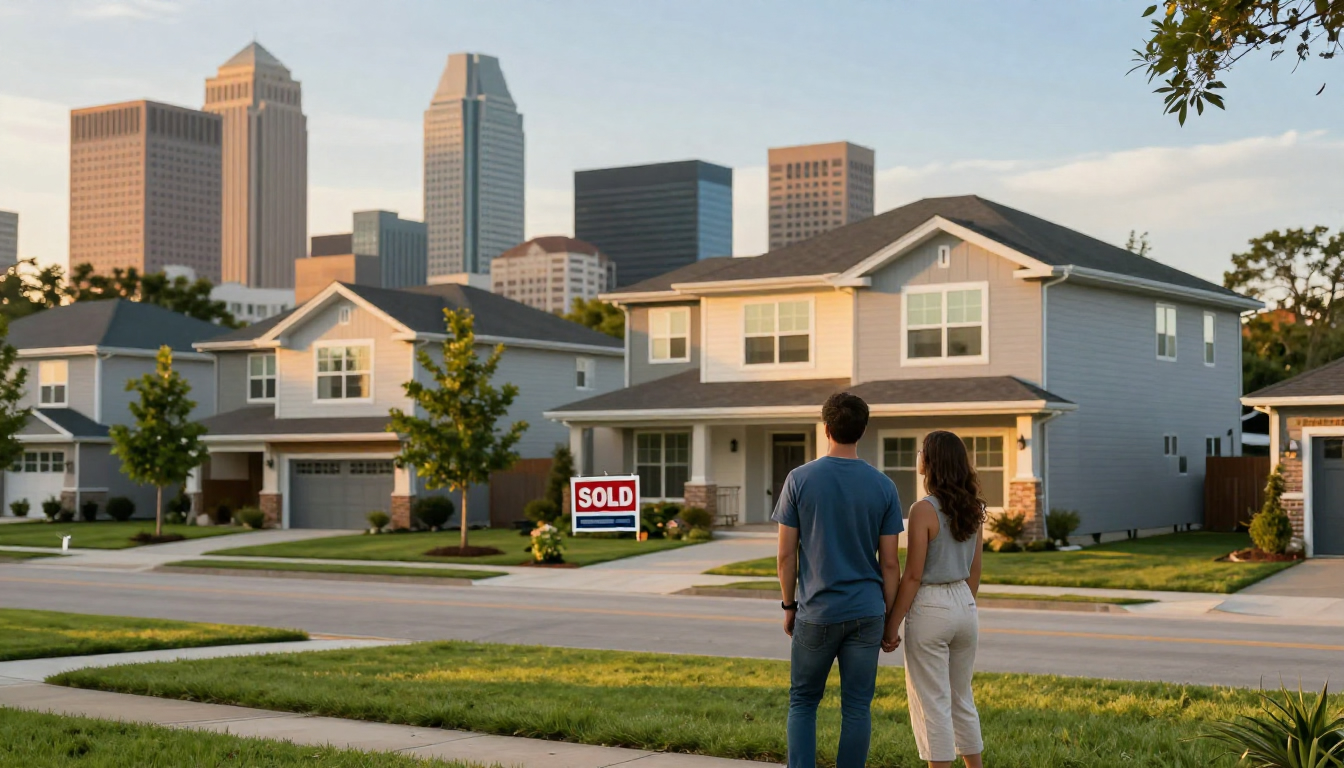
Top Strategies to Navigate the Houston Home Buying Process for First-Time Buyers
Top strategies to navigate the Houston home buying process for first-time buyers
Introduction
Buying your first home in Houston is an exciting yet complex journey that requires careful planning and informed decision-making. The Houston real estate market presents unique opportunities and challenges for first-time buyers, from navigating competitive neighborhoods to understanding the local market dynamics. Whether you’re drawn to the urban energy of downtown, the suburban comfort of areas like The Woodlands, or the emerging neighborhoods along the expansion corridors, understanding the home buying process is essential. This guide explores the top strategies that will help you successfully navigate your first home purchase in Houston, from assessing your financial readiness to closing on your dream property. By following these strategic approaches, you’ll be better equipped to make smart decisions that align with your goals and budget.
Assessing your financial readiness and getting pre-approved
Before you start searching for homes in Houston, understanding your financial position is the foundation of a successful purchase. Financial readiness encompasses more than just having money saved for a down payment. It includes evaluating your credit score, debt-to-income ratio, savings capacity, and long-term financial goals. Most lenders require a minimum credit score of 620 to qualify for a mortgage, though scores above 740 typically result in more favorable interest rates.
Getting pre-approved for a mortgage should be one of your first steps. Unlike a pre-qualification, which is informal and based on self-reported information, a pre-approval involves a thorough review of your financial documents by a lender. This process requires submitting tax returns, pay stubs, bank statements, and employment verification. A pre-approval letter shows sellers that you’re a serious buyer and helps you understand exactly how much you can afford to borrow.
In the Houston market, where home prices have appreciated steadily, understanding your borrowing capacity is crucial. According to recent data, the median home price in Houston hovers around $380,000, though this varies significantly by neighborhood. Consider these financial preparation steps:
- Check your credit score and dispute any errors with the credit bureaus
- Pay down existing debts to improve your debt-to-income ratio
- Gather documentation for the pre-approval process, including the last two years of tax returns
- Calculate how much you can comfortably afford monthly, accounting for property taxes, insurance, and HOA fees
- Determine your down payment amount, keeping in mind that conventional loans typically require 3-20 percent down
Texas offers some advantages for homebuyers, including no state income tax, which can positively impact your overall financial situation. However, property taxes in Houston average around 1.8 percent of property value annually, which is relatively high and should factor into your affordability calculations. Understanding these costs upfront prevents financial strain after you’ve purchased your home.
Understanding the Houston real estate market and choosing the right neighborhood
Houston’s real estate market is diverse and multifaceted, with each neighborhood offering distinct characteristics, price points, and lifestyle amenities. Successfully choosing where to buy requires balancing your personal preferences with market realities and long-term investment potential. The city spans over 670 square miles with distinct neighborhoods ranging from established communities to rapidly developing areas.
The Houston market is characterized by relative affordability compared to other major metropolitan areas, coupled with steady appreciation rates. However, inventory levels, average days on market, and price trends vary significantly by neighborhood and price range. First-time buyers should research multiple neighborhoods to understand which areas align with their lifestyle, commute requirements, and investment timeline.
Consider the following neighborhood categories in Houston:
| Neighborhood Category | Characteristics | Typical Price Range | Best For |
|---|---|---|---|
| Urban Core | Walking distance to restaurants, nightlife, cultural venues | $400,000 – $700,000+ | Young professionals, cultural enthusiasts |
| Inner Loop Suburbs | Established neighborhoods, excellent schools, mature trees | $350,000 – $550,000 | Families, school-focused buyers |
| Master-Planned Communities | Amenities, HOA, newer construction, family-friendly | $300,000 – $600,000 | Families seeking community features |
| Growth Corridors | Emerging areas, newer developments, appreciation potential | $250,000 – $450,000 | Investors, buyers seeking value |
| Suburban Enclaves | Quiet, spacious lots, established infrastructure | $280,000 – $500,000 | Families wanting space and privacy |
When evaluating neighborhoods, visit them at different times of day and on weekends. Walk around, talk to residents, and explore local amenities. Check school ratings if you have children, review crime statistics, and investigate planned development projects that might affect the area’s future. Understanding whether a neighborhood is appreciating, stable, or declining helps inform your investment decision.
Houston’s geography also matters significantly. The city has four main regions: northwest (The Woodlands, Spring), southwest (Sugar Land, Missouri City), southeast (Pearland, Pasadena), and northeast (Kingwood, Humble). Each region has distinct characteristics and commuting patterns. Consider your workplace location and whether you prefer a short commute or are willing to drive further for the right neighborhood and price point.
Working with a real estate agent and navigating the offer process
A knowledgeable real estate agent becomes your partner in the home buying journey, providing market insights, negotiation expertise, and access to listings. Choosing the right agent can significantly impact your success as a first-time buyer. Look for agents with substantial experience in your target neighborhoods and a proven track record with first-time buyers.
Your agent should provide comparative market analysis (CMA) to help you understand home values in your desired area. This analysis compares recently sold properties with similar features, square footage, condition, and location. A strong CMA helps you make competitive offers without overpaying. In Houston’s market, properties typically sell within 30-45 days, though this varies by neighborhood and price range.
Once you’ve found properties that interest you, the offer process begins. Your agent helps you craft a competitive offer that reflects the property’s value and your financial capacity. Key elements of your offer include:
- Purchase price: Based on CMA and current market conditions
- Earnest money deposit: Typically 1-2 percent of purchase price, held in escrow
- Loan contingency: Protects you if financing falls through
- Inspection period: Usually 7-10 days to have the property professionally inspected
- Appraisal contingency: Protects you if the home appraises lower than your offer
- Closing timeline: Typically 30-45 days from accepted offer to closing
In competitive Houston neighborhoods, sellers may receive multiple offers. To strengthen your offer, consider offering a higher earnest money deposit, shortening the inspection period, or removing certain contingencies. However, balance competitiveness with protection. Never remove critical contingencies like the loan or inspection contingency just to win a bidding war.
Once your offer is accepted, you enter the due diligence period where you’ll hire inspectors, order the appraisal, and conduct a title search. Your lender orders the appraisal to ensure the property’s value supports the loan amount. If the appraisal comes in lower than your offer price, you have options: renegotiate, request a second appraisal, or walk away depending on your contingencies.
Managing inspections, appraisals, and the final steps to closing
The period between offer acceptance and closing involves several critical steps that protect your investment and ensure you’re making a sound purchase. These steps require attention to detail and quick decision-making. The home inspection is particularly important as it uncovers defects that may not be visible during showings.
The home inspection typically costs $400-$600 and takes two to three hours. Your inspector evaluates the roof, foundation, electrical systems, plumbing, HVAC, and overall structure. They provide a detailed report identifying any issues. Minor issues like worn caulk or missing outlet covers are typical, but major issues like foundation cracks, roof deterioration, or faulty electrical systems require serious consideration. If significant issues are discovered, you have options: request repairs, request credits toward repairs you’ll make yourself, or renegotiate the purchase price.
The appraisal process runs concurrently with your inspection. A licensed appraiser, ordered through your lender, evaluates whether the property’s value supports your loan amount. If an appraisal comes in low, you’ll need to either make up the difference in cash, renegotiate with the seller, or potentially walk away. Most purchase agreements include an appraisal contingency protecting you from this scenario.
During this period, your lender completes the underwriting process, verifying all your financial information, employment, and assets. You may receive additional document requests. Respond promptly to maintain your closing timeline. Your lender also orders a title search to ensure the seller has clear ownership and the property has no liens or claims against it.
A few days before closing, request a final walkthrough of the property. Verify that agreed-upon repairs have been completed, personal property the seller promised to leave is still there, and the property condition matches your expectations. This is your last opportunity to address concerns before you take ownership.
Closing involves signing extensive paperwork, including the promissory note and deed of trust. Your closing costs typically range from 2-5 percent of the purchase price and may include:
- Loan origination fees
- Appraisal and inspection fees
- Title search and title insurance
- Property taxes and homeowner’s insurance (often prepaid)
- Survey costs (if required)
- HOA transfer fees (if applicable)
After signing all documents and transferring funds, the deed is recorded with the Harris County clerk, and you officially own your new home. Obtain copies of all closing documents and store them safely, along with your mortgage note and deed of trust.
Conclusion
Navigating the Houston home buying process as a first-time buyer requires strategic planning across multiple fronts. Starting with a clear understanding of your financial position and obtaining pre-approval gives you confidence and credibility in the market. Researching neighborhoods thoroughly ensures you select a location that matches your lifestyle and investment goals. Working with an experienced real estate agent empowers you to make competitive offers while protecting your interests through proper contingencies. Finally, carefully managing inspections, appraisals, and closing procedures safeguards your investment and ensures a smooth transaction. The Houston real estate market offers substantial opportunities for first-time buyers, with diverse neighborhoods, relatively affordable pricing compared to other major cities, and steady appreciation potential. By following these strategies, maintaining realistic expectations, and remaining patient throughout the process, you’ll be well-positioned to make a successful purchase that serves your needs for years to come. Remember that each step of the process exists to protect you and ensure you’re making an informed decision about one of the largest investments of your life.

Free Guide:
First-Time Homebuyer Loans Explained
Download the free playbook that explains your options in plain English—written by a CPA and licensed Realtor.