
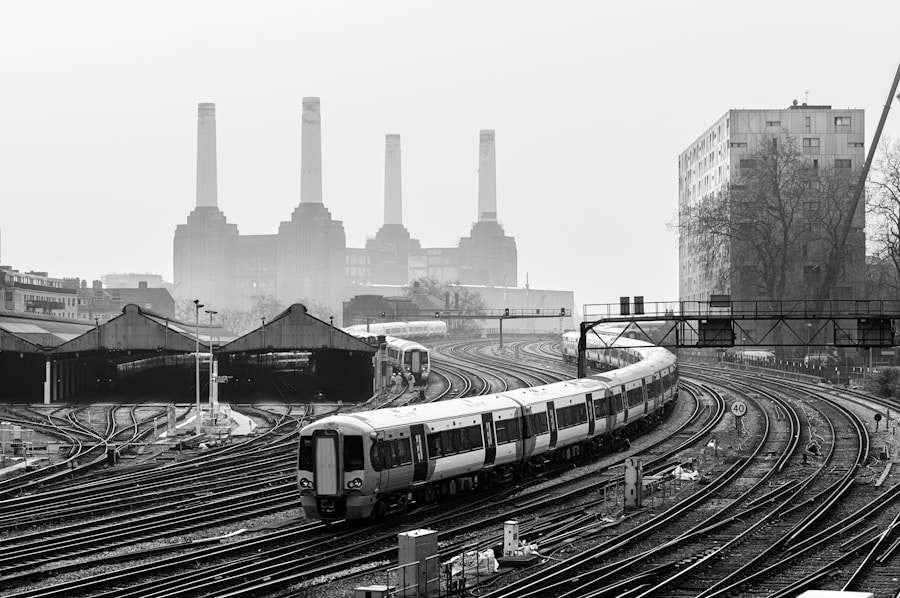
From Warehouses to Workspaces: The Evolution of Industrial Real Estate
Industrial real estate, often perceived as a prosaic asset class, has undergone a profound transformation. What began as rudimentary storage facilities has evolved into sophisticated logistical hubs and multi-functional workspaces. This article traces the trajectory of this evolution, examining the forces that have shaped its current form and anticipating future developments.
The Early Days: Storage and Production
The genesis of industrial real estate can be traced to the need for centralized storage and manufacturing. Before the advent of large-scale industrialization, production was largely distributed, often occurring in homes or small workshops. The Industrial Revolution, however, necessitated dedicated spaces.
From Mills to Factories
The earliest industrial buildings were often water-powered mills, strategically located near rivers. These structures were functional, designed to house heavy machinery and provide space for manual labor. As steam power gained prominence, proximity to waterways became less critical, leading to the development of factories in urban centers. These early factories were characterized by multi-story construction, often with limited natural light and ventilation, reflecting the prevailing emphasis on maximizing floor space for production.
The Rise of Warehouses
As manufacturing output increased, so did the demand for storage. Raw materials needed to be stockpiled, and finished goods required temporary housing before distribution. The first warehouses were essentially large, open-plan buildings, often built from brick or stone. Their primary function was passive storage, with manual labor for loading and unloading goods. Think of these as the primordial soup of industrial real estate, foundational but lacking complexity.
The Twentieth Century: Modernization and Specialization
The 20th century brought significant advancements in transportation and manufacturing, directly impacting industrial real estate. The emergence of new technologies and economic models spurred a move towards more specialized and efficient facilities.
The Influence of Transportation
The proliferation of railroads and, later, highways, fundamentally altered logistics. Industrial facilities began to be co-located near these transportation arteries, facilitating the movement of goods. The single-story warehouse, with its wider bays and easier access for trucks, started to supersede the multi-story factory for many applications. This shift marked a crucial turning point, recognizing the value of horizontal flow in logistics.
Dedicated Distribution Centers
As supply chains grew in complexity, the simple warehouse evolved into the distribution center. These facilities were designed not just for storage, but also for the efficient sorting, staging, and cross-docking of goods. Automation, though nascent, began to appear in the form of conveyor belts and pallet jacks, hinting at the future of logistics. The objective was to minimize dwell time and maximize throughput, reflecting a growing understanding of time as a critical resource in the supply chain.
Research and Development Facilities
Beyond manufacturing and storage, the 20th century also saw the emergence of dedicated research and development (R&D) facilities. These began to diversify the industrial real estate landscape, moving beyond purely brawny functions to encompass intellectual pursuits. These buildings required different specifications such as specialized laboratories, clean rooms, and office space for scientists and engineers.
The Digital Age: The Rise of E-commerce and Automation
The turn of the millennium, propelled by the internet and the rise of e-commerce, instigated a seismic shift in industrial real estate. This period marked a transformation from traditional warehousing to highly integrated, technology-driven logistics operations.
Fulfillment Centers: The Heart of E-commerce
The explosion of online retail necessitated a new breed of industrial facility: the fulfillment center. Unlike traditional distribution centers that pushed goods to retailers, fulfillment centers directly serve individual consumers. This requires capabilities for picking, packing, and shipping individual items at scale. These facilities are often characterized by high ceilings for vertical storage, sophisticated conveyor systems, and increasingly, robotic automation. Think of them as giant, sophisticated vending machines for the digital age, operating 24/7.
Last-Mile Logistics
The promise of quick delivery, a cornerstone of e-commerce, spurred the development of “last-mile” logistics facilities. These smaller, strategically located warehouses or urban distribution centers are positioned close to population centers. Their purpose is to facilitate rapid delivery to the end consumer, minimizing travel time and fuel costs. This segment of industrial real estate is often characterized by its urban infill nature, often repurposing existing structures or developing on smaller, challenging sites.
Data Centers: The Digital Backbone
While not traditionally categorized as industrial, data centers represent a growing and significant portion of the industrial real estate landscape. These facilities house the servers and networking equipment that power the internet and digital economy. Their requirements – massive power consumption, extensive cooling systems, and heightened security – are highly specialized, pushing the boundaries of traditional industrial building design and infrastructure. Data centers are the unseen engine rooms of the digital world, demanding robust and resilient structures.
The Future Landscape: Sustainability and Multi-Modality
Looking ahead, the evolution of industrial real estate will likely be shaped by a combination of technological advancements, environmental imperatives, and evolving economic pressures.
Sustainable Industrial Buildings
Sustainability is no longer a niche concern but a critical driver in industrial development. Energy efficiency, renewable energy sources, and sustainable building materials are becoming standard considerations. Think of features like solar panels on rooftops, rainwater harvesting systems, and green building certifications. The economic benefits of reduced operating costs coupled with corporate social responsibility are pushing this transformation.
Vertical Industrial and Urban Manufacturing
As urban land becomes scarcer and more expensive, the concept of vertical industrial buildings is gaining traction. These multi-story facilities can house a mix of manufacturing, R&D, and even office space within a single structure, especially in dense urban environments. This mirrors the early factories but with modern design, technology, and a focus on integrating industrial functions into the urban fabric. It’s a return to verticality, but with a new rationale.
Reshoring and Nearshoring
Geopolitical shifts and supply chain vulnerabilities are leading some companies to reconsider globalized production. This “reshoring” or “nearshoring” trend will likely boost demand for industrial facilities closer to home markets, particularly in regions with established manufacturing capabilities and skilled labor forces. This could lead to a resurgence of certain industrial hubs, driven by strategic rather than purely cost-driven decisions.
Challenges and Opportunities
| Year | Industrial Real Estate Vacancy Rate | Industrial Real Estate Rental Rates |
|---|---|---|
| 2010 | 8% | 5.50 per square foot |
| 2015 | 6% | 6.20 per square foot |
| 2020 | 4% | 7.00 per square foot |
While the trajectory of industrial real estate is generally positive, it faces ongoing challenges and presents significant opportunities for innovation.
Labor Shortages and Automation
The industrial sector, particularly logistics, often grapples with labor shortages. This has spurred a rapid acceleration in automation and robotics within warehouses and fulfillment centers. From autonomous forklifts to robotic picking systems, technology is filling labor gaps and increasing efficiency. This presents industrial real estate developers with the challenge of designing facilities that can seamlessly integrate these advanced technologies. The buildings themselves become increasingly intelligent platforms for automation.
Infrastructure Demands
The specialized nature of modern industrial facilities, especially data centers and advanced manufacturing plants, places significant demands on existing infrastructure. Access to reliable power, high-speed data connectivity, and robust transportation networks are paramount. The ability of municipalities and utility providers to meet these growing demands will be a critical factor in the location and development of future industrial parks.
The Blurring of Lines: Industrial and Office Space
The traditional demarcation between industrial and office space is becoming increasingly blurred. Many modern industrial facilities incorporate significant amounts of office space for administrative functions, research teams, and even customer service. This “flex space” caters to companies that require both production/storage capabilities and a comfortable, collaborative work environment. This integration reflects a holistic view of the modern workplace, moving beyond siloed functions.
In conclusion, industrial real estate has evolved from simple storage units to sophisticated technological ecosystems. It is a dynamic asset class that reflects broader economic and technological shifts. As you consider its future, remember that it is not merely about bricks and mortar; it is about the intricate dance of goods, information, and innovation that defines our connected world. The journey from the rudimentary warehouse to the highly automated fulfillment center is a testament to human ingenuity and the relentless pursuit of efficiency and optimization.
FAQs
What is industrial real estate?
Industrial real estate refers to properties used for industrial purposes, such as manufacturing, distribution, storage, and research and development. These properties can include warehouses, distribution centers, manufacturing facilities, and industrial parks.
How has industrial real estate evolved over time?
Industrial real estate has evolved from traditional warehouses and manufacturing facilities to more modern and flexible workspaces. This evolution has been driven by changes in technology, consumer behavior, and the rise of e-commerce, leading to a greater demand for efficient and adaptable industrial spaces.
What are some key trends in industrial real estate today?
Some key trends in industrial real estate today include the rise of e-commerce and the need for last-mile distribution centers, the integration of technology and automation in industrial facilities, and the growing demand for sustainable and environmentally-friendly industrial spaces.
What are the factors driving the demand for industrial real estate?
The demand for industrial real estate is being driven by factors such as the growth of e-commerce, the need for efficient supply chain and logistics networks, the expansion of manufacturing and production activities, and the increasing focus on sustainability and environmental responsibility.
What are the challenges facing industrial real estate developers and investors?
Challenges facing industrial real estate developers and investors include finding suitable locations for industrial developments, adapting to changing consumer and market demands, integrating new technologies and sustainability practices, and navigating regulatory and zoning requirements for industrial properties.

Free Guide:
First-Time Homebuyer Loans Explained
Download the free playbook that explains your options in plain English—written by a CPA and licensed Realtor.