
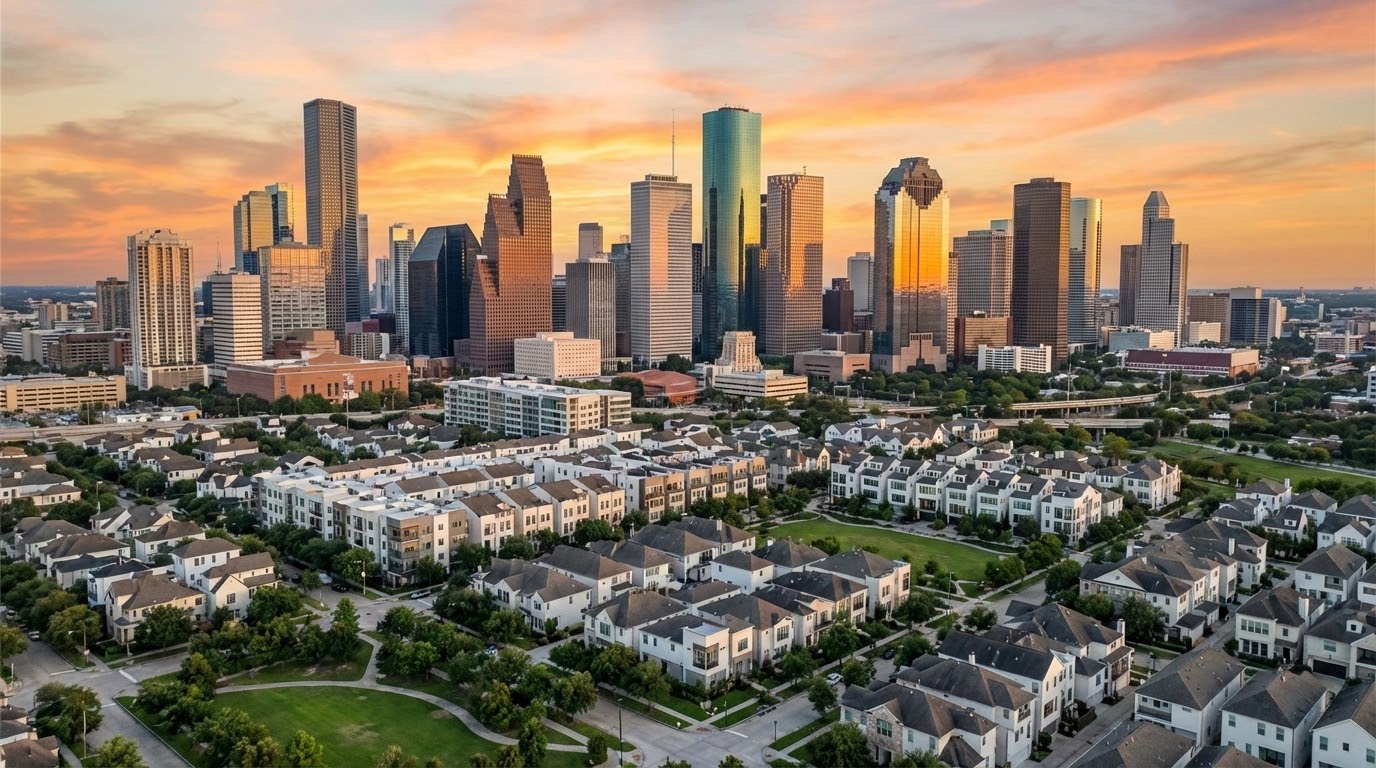
Top Neighborhoods in Houston for Real Estate Investment in 2026
Top neighborhoods in Houston for real estate investment in 2026
Introduction
Houston continues to establish itself as one of the most attractive real estate markets in the United States, offering diverse opportunities for investors seeking growth and stability. With a population exceeding 2.3 million people and a robust economy driven by energy, healthcare, and technology sectors, the city presents compelling reasons to invest in its neighborhoods. As we look toward 2026, specific areas of Houston are emerging as particularly promising for real estate investors, combining strong appreciation potential, rental yields, and demographic growth. This article explores the top neighborhoods that warrant serious consideration for investment strategies in the coming year, examining the factors that make each location unique and valuable. Understanding these opportunities requires analyzing economic indicators, demographic trends, infrastructure development, and market fundamentals that will shape Houston’s real estate landscape in 2026.
Market fundamentals driving Houston’s real estate growth
Houston’s real estate market benefits from several structural advantages that distinguish it from other major metropolitan areas. No state income tax in Texas creates a significant advantage for both individual investors and corporations, attracting talent and businesses to the region continuously. This tax benefit directly translates to increased demand for housing, both for primary residences and investment properties. The city’s diversified economy means that real estate appreciation isn’t dependent on a single industry, reducing volatility compared to markets tied to oil or technology alone.
The metropolitan area has experienced consistent population growth, with the Greater Houston area adding approximately 150,000 new residents annually over the past five years. This growth rate significantly exceeds national averages and creates sustained demand for residential properties. Additionally, Houston’s relatively affordable housing compared to coastal markets like California and New York attracts first-time homebuyers and investors seeking better returns on investment capital. Infrastructure projects scheduled for completion through 2026, including transit expansions and highway improvements, will further enhance accessibility and property values in strategic locations.
Job creation across multiple sectors strengthens the investment case. The healthcare sector, anchored by the Texas Medical Center, continues expanding with new facilities and research institutions. Energy companies maintain significant operations in Houston despite the transition toward renewable energy sources. Tech startups and established companies increasingly relocate to Houston, creating a more diversified employment base. These employment opportunities directly correlate with residential demand and rental income potential for investors.
Midtown Houston: Urban revitalization and development
Midtown represents one of Houston’s most dynamic transformation stories, having evolved from a declining neighborhood into a vibrant urban center attracting young professionals and investors. The area spans approximately 300 acres between downtown and Hermann Park, positioning it strategically for both location convenience and lifestyle appeal. The neighborhood’s renaissance demonstrates how targeted investment and strategic planning can fundamentally reshape an area’s trajectory and investment potential.
Real estate fundamentals in Midtown show impressive metrics. Median home prices have appreciated steadily, with average values reaching approximately $450,000 to $550,000 for single-family homes, while condominiums range from $200,000 to $400,000 depending on specific location and amenities. Rental yields for both residential and commercial properties remain attractive, with average rental rates for apartments ranging from $1,200 to $1,600 per month for one-bedroom units. The neighborhood attracts professionals aged 25 to 40, representing Houston’s most affluent demographic segment with strong income growth potential.
What distinguishes Midtown as an investment opportunity through 2026 involves its ongoing development pipeline and retail expansion. Major retailers, restaurants, and entertainment venues continue establishing locations in the neighborhood, enhancing property values and tenant demand. Mixed-use developments combine residential, commercial, and retail spaces, creating comprehensive urban environments that appeal to renters and buyers seeking walkability and convenience. The proximity to Hermann Park, museums, and cultural institutions adds intangible value that translates into premium pricing and stronger occupancy rates for rental properties.
Infrastructure improvements further support Midtown’s investment case. The planned light rail expansion, while ongoing, will ultimately enhance connectivity to downtown and other major employment centers. Walkability scores have improved significantly as sidewalk infrastructure, bike lanes, and pedestrian amenities continue developing. These improvements reduce car dependency and appeal strongly to younger demographics who prioritize urban lifestyle factors alongside affordability.
The Woodlands: Suburban growth with established infrastructure
The Woodlands offers a contrasting investment profile to Midtown, representing mature suburban development combined with continued expansion and modernization. Located approximately 25 miles north of downtown Houston, The Woodlands combines the appeal of established neighborhoods with ongoing infrastructure improvements and population growth. This duality creates opportunities for both value-add and core-plus real estate strategies.
The neighborhood’s development history, beginning in the 1970s, created a well-planned community with comprehensive amenities, excellent schools, and strong governance through established master planned community structures. Currently, approximately 220,000 residents call The Woodlands home, with projections suggesting continued growth toward 250,000 residents by 2026. This steady expansion generates consistent demand for housing across all price points and rental categories.
Real estate metrics in The Woodlands demonstrate stability and appreciation potential. Single-family homes range from $300,000 to $800,000 depending on size, location within the master planned community, and proximity to retail centers. Rental properties command strong rates, with three-bedroom homes renting for $1,800 to $2,400 monthly. Commercial real estate, including retail and office spaces, maintains high occupancy rates above 90%, indicating robust economic activity. The community’s focus on quality construction and maintenance supports property values and makes it attractive to owner-occupants and renters alike.
Investment advantages extend beyond current performance to future positioning. The Woodlands continues developing new mixed-use centers that blend residential, retail, and office spaces. The upcoming corporate campuses attracting major employers ensure employment growth that supports housing demand. The master planned community model provides governance stability, maintains property standards, and facilitates long-term value preservation. For investors prioritizing steady returns with lower volatility compared to emerging neighborhoods, The Woodlands offers compelling fundamentals heading into 2026.
School quality represents another critical advantage. The Woodlands serves excellent schools, including both public options through The Woodlands Independent School District and private alternatives. Superior educational institutions drive residential demand from families, representing one of the most stable buyer and renter demographics. This focus on education, combined with active community amenities including golf courses, recreation centers, and parks, creates a comprehensive lifestyle proposition that sustains property values and supports premium pricing.
East Houston neighborhoods: Emerging opportunities and value positioning
East Houston neighborhoods, including areas like Greenspoint and the greater Northeast corridor, represent emerging investment opportunities characterized by lower entry costs, significant appreciation potential, and demographic growth. While historically overlooked compared to west and southwest Houston, these neighborhoods now offer compelling value propositions as demographic shifts and infrastructure improvements reshape the area’s perception and reality.
Demographic trends in East Houston show accelerating diversification and growth. The neighborhood increasingly attracts immigrant populations and young families seeking affordable housing while maintaining reasonable commutes to employment centers. This demographic composition creates particular rental demand, as these populations often seek rental housing before establishing owner-occupancy. Average rental rates in East Houston remain significantly lower than other Houston neighborhoods, with two-bedroom apartments renting for $900 to $1,200 monthly, compared to $1,400 to $1,800 in comparable westside locations.
Purchase prices reflect the neighborhood’s emerging status. Single-family homes can be acquired for $150,000 to $300,000, representing substantial discounts compared to established neighborhoods. For investors pursuing value-add strategies, this pricing creates opportunities to acquire, renovate, and either resell or rent properties for strong returns. Property appreciation in East Houston has exceeded Houston averages over the past five years, and projections suggest this trend will continue as the neighborhood develops.
Infrastructure investments drive the investment thesis. TxDOT completed major improvements to I-10 and local feeder roads, reducing commute times and increasing accessibility. Future transit plans include potential light rail extensions that would further enhance connectivity. The Greenspoint Mall area undergoes redevelopment, with plans to convert aging retail infrastructure into mixed-use developments incorporating residential, entertainment, and dining options. These transformations address historical challenges while positioning East Houston as a genuine alternative to more established neighborhoods.
| Neighborhood | Average home price | Avg. rent (2BR) | Population growth | Investment profile |
|---|---|---|---|---|
| Midtown | $450K-$550K | $1,400-$1,800 | High (8-10%) | Urban revitalization |
| The Woodlands | $300K-$800K | $1,800-$2,400 | Moderate (4-6%) | Stable suburban |
| East Houston | $150K-$300K | $900-$1,200 | Very high (10-15%) | Value-add growth |
| Sugar Land | $400K-$900K | $1,600-$2,200 | Moderate (5-7%) | Affluent suburban |
Strategic considerations for 2026 real estate investment
Successful real estate investment in Houston requires understanding how different neighborhoods serve distinct investment objectives and risk profiles. Core-plus investors seeking stable returns with modest appreciation should prioritize established neighborhoods like The Woodlands and Sugar Land, where property values benefit from quality infrastructure, good schools, and consistent demand. These neighborhoods offer predictable cash flows with lower volatility, making them suitable for conservative portfolios.
Value-add investors with higher risk tolerance and active management capacity should focus on emerging neighborhoods like East Houston and up-and-coming areas showing strong demographic growth and infrastructure improvements. These neighborhoods offer greater appreciation potential through strategic property improvements and market maturation. The lower acquisition costs provide capital efficiency and allow investors to acquire multiple properties with equivalent investment compared to established neighborhoods.
Growth investors prioritizing appreciation should closely monitor Midtown and similar urban revitalization projects showing strong momentum. These neighborhoods combine lifestyle appeal with consistent new supply of retail, dining, and entertainment amenities that attract affluent demographic segments. While entry costs exceed emerging neighborhoods, the combination of strong appreciation, potential rental yields, and lifestyle premium pricing justifies the investment for those seeking maximum growth.
Market timing becomes increasingly important as 2026 approaches. Interest rate environments, mortgage availability, and economic growth will influence property valuations across all neighborhoods. Investors should maintain flexibility to adjust strategies based on economic conditions while maintaining focus on long-term fundamentals driving Houston’s real estate market. Diversification across neighborhoods and property types reduces portfolio risk while capturing opportunities across different market segments.
Conclusion
Houston’s real estate market in 2026 presents diverse opportunities for investors across multiple neighborhood types and investment strategies. Midtown represents urban revitalization potential with strong appreciation and lifestyle appeal attracting affluent younger demographics. The Woodlands provides stability through established infrastructure, excellent schools, and consistent demographic growth, making it suitable for conservative investors seeking reliable returns. East Houston neighborhoods offer emerging opportunities with significant value-add potential and appreciation upside, supported by demographic growth and infrastructure improvements. The comparative analysis demonstrates that successful Houston real estate investing requires matching neighborhood characteristics with specific investment objectives and risk tolerances.
The fundamental drivers supporting Houston’s real estate growth, including population expansion, employment diversity, tax advantages, and infrastructure development, create a favorable environment for investment across multiple neighborhoods. Whether prioritizing cash flow through stable rental income, pursuing value appreciation through emerging neighborhood investment, or seeking lifestyle premium positioning through urban development, Houston offers viable pathways to real estate success. Investors should conduct thorough due diligence specific to individual properties and neighborhoods while maintaining awareness of broader market trends. By understanding the distinct characteristics, advantages, and positioning of these leading Houston neighborhoods, investors can make informed decisions positioning their portfolios for strong performance through 2026 and beyond.

Free Guide:
First-Time Homebuyer Loans Explained
Download the free playbook that explains your options in plain English—written by a CPA and licensed Realtor.