
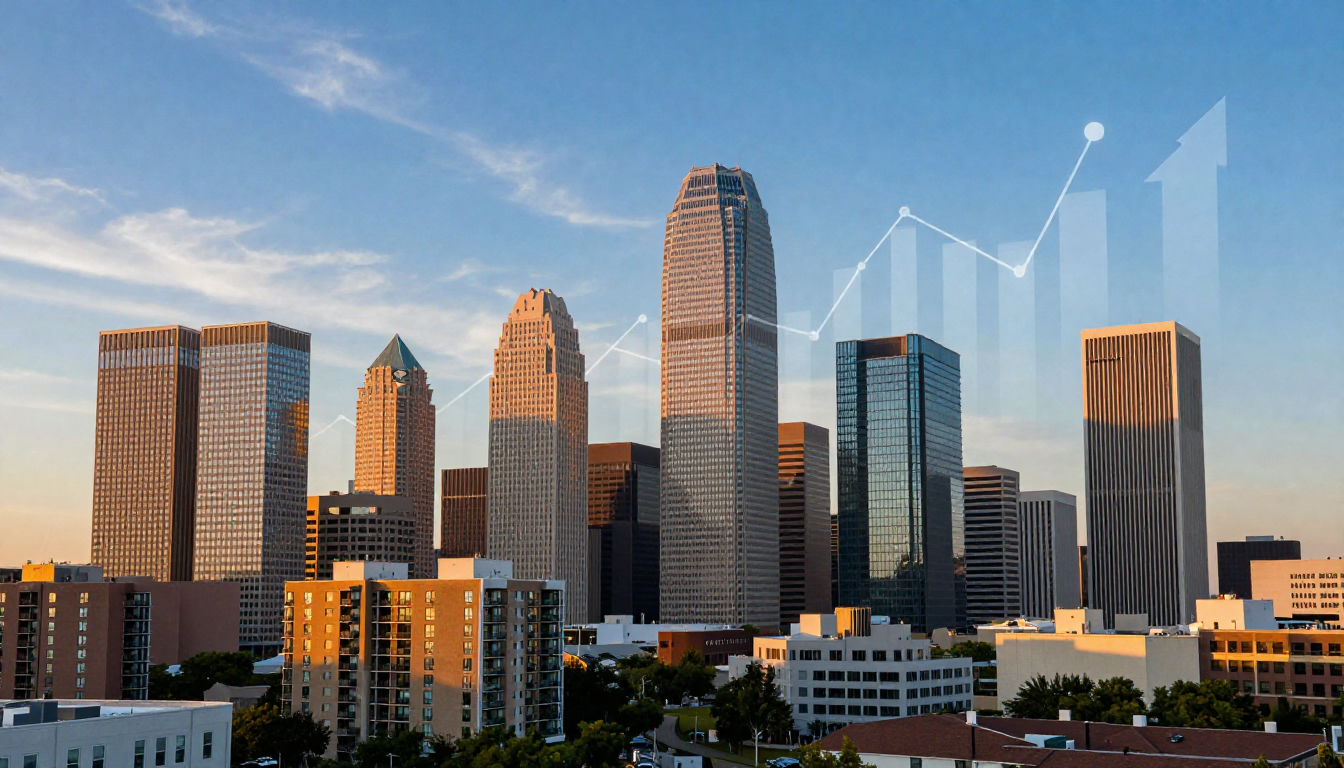
2026 Houston Real Estate Market Trends and Forecast
Introduction
The Houston real estate market has long been a dynamic and attractive destination for investors, homebuyers, and developers. As we look toward 2026, understanding the anticipated trends and forecasts becomes essential for anyone involved in the property sector. Houston’s market is shaped by multiple factors including economic growth, population migration, employment opportunities, and housing supply dynamics. This article explores the key trends expected to influence the Houston real estate landscape through 2026, providing insights into price movements, inventory levels, buyer behavior, and investment opportunities. Whether you’re a prospective homebuyer, investor, or real estate professional, grasping these trends will help you make informed decisions in an increasingly competitive market.
Population growth and demographic shifts driving housing demand
Houston continues to experience substantial population growth, driven primarily by in-migration from other states and international relocation. The city’s economic diversification beyond oil and gas, coupled with lower cost of living compared to major coastal metropolitan areas, makes it increasingly appealing to young professionals, families, and remote workers. This demographic shift has profound implications for the real estate market heading into 2026.
The Greater Houston area is projected to add approximately 2.5 million residents over the next decade, with significant acceleration through 2026. This growth rate significantly outpaces the national average, creating sustained demand for residential properties across all price points. Millennials and Gen Z buyers are particularly drawn to Houston’s neighborhoods offering walkability, mixed-use development, and proximity to employment centers. Simultaneously, older demographics are seeking more affordable retirement communities within the metropolitan area rather than relocating entirely.
This diversified demand creates opportunities across different property segments. Suburban markets are experiencing explosive growth as families seek space and value, while urban core properties remain attractive to younger, more mobile professionals. The northwest and southwest corridors of Houston are becoming increasingly competitive markets, with developers responding to demand through new residential construction. By 2026, expect to see continued demographic-driven appreciation, particularly in emerging suburban communities that offer modern amenities and strong school systems.
The influx of corporate relocations, particularly in technology and professional services sectors, is channeling high-income earners into the market. These demographics tend to purchase higher-value properties and drive appreciation in premium neighborhoods. Understanding which demographic groups are moving where helps predict which neighborhoods will experience the strongest appreciation through 2026.
Inventory constraints and supply-demand imbalance
Despite Houston’s reputation for abundant land and development potential, the real estate market is experiencing growing inventory constraints that will likely persist through 2026. The rapid population influx has outpaced new construction in many segments, creating a supply-demand imbalance that supports price appreciation. This mismatch represents one of the most significant market dynamics to understand when forecasting Houston’s real estate trajectory.
Houston’s housing inventory has declined substantially from historical levels. At current absorption rates, many segments of the market have less than six months of inventory, which is considered a seller’s market. New construction has increased but struggles to keep pace with demand, particularly in the mid-range price segment where most migration-driven buyers concentrate their purchases. Builders face challenges including rising material costs, labor shortages, and land acquisition expenses that have compressed margins and slowed construction starts.
The inventory shortage is not uniform across all markets. Some segments show stronger inventory levels while others are critically short. Consider this breakdown:
| Price segment | Current inventory level | 2026 forecast | Market indicator |
|---|---|---|---|
| Under $300,000 | 3-4 months | 3-5 months | Strong seller market |
| $300,000-$500,000 | 4-6 months | 5-7 months | Balanced to slight seller |
| $500,000-$750,000 | 5-7 months | 6-9 months | Balanced market |
| $750,000+ | 7-10 months | 8-12 months | Buyer advantages |
This supply constraint will continue supporting price appreciation through 2026, particularly in the segments with the most severe shortages. However, as new construction accelerates and planned developments come online, relief may begin appearing in some markets by late 2025 and into 2026. The key variable remains whether builders can close the gap or whether demand will continue outpacing supply. Most forecasters expect the supply-demand imbalance to persist, supporting modest price appreciation even as new inventory comes to market.
Price appreciation patterns and market segmentation
Houston’s real estate market will not appreciate uniformly through 2026. Different segments, neighborhoods, and property types will experience varying price trajectories based on demand strength, inventory levels, and investor interest. Understanding these segmentation patterns is critical for making sound investment or purchasing decisions.
The entry-level market, particularly homes under $350,000, has experienced the strongest appreciation in recent years and is expected to continue this trend through 2026. Migration-driven demand from first-time buyers and young families concentrates in this segment, while inventory remains constrained. Appreciation rates in this segment are forecast at 3 to 5 percent annually, slightly outpacing broader inflation. These properties also attract investor interest for rental conversion, further supporting demand and prices.
The move-up market, ranging from $350,000 to $600,000, represents a critical segment for understanding broader market health. This category appeals to established professionals and growing families trading up from starter properties. Appreciation in this segment is expected to moderate to 2 to 4 percent annually as inventory levels improve slightly and a broader buyer pool creates more balanced conditions. Competition in this segment remains strong but less frenzied than the entry-level market.
Luxury properties above $750,000 have experienced softer appreciation and increasing inventory pressures. These markets are more vulnerable to economic cycles and interest rate sensitivity, as buyers at this level have greater discretion. Through 2026, appreciation in the luxury segment is forecast at 1 to 3 percent annually, with potential for price softening if economic conditions deteriorate. However, Houston’s luxury market has proven resilient, supported by corporate relocations and strong demand from international investors.
Geographic segmentation is equally important. Inner-loop properties and established urban neighborhoods command price premiums but face inventory challenges and higher entry costs. Suburban markets along the northwest and southwest corridors are experiencing rapid appreciation as new development drives growth. Emerging neighborhoods on the urban fringe offer value opportunities with appreciation potential but carry execution risk regarding infrastructure development and long-term neighborhood viability.
Investment property appreciation differs from owner-occupied patterns. Single-family rentals and multi-family assets have attracted substantial institutional capital, driving prices in segments most suitable for conversion to rental use. By 2026, expect to see continued investor activity in properties priced between $250,000 and $400,000, with appreciation potentially exceeding 5 percent annually in competitive submarkets.
Interest rates, financing conditions, and buyer purchasing power
The trajectory of interest rates through 2026 will fundamentally shape Houston’s real estate market. Mortgage rates directly influence buyer purchasing power, and even modest rate changes create significant market impacts. Current economic forecasts suggest interest rates will remain elevated compared to the historic lows of 2020-2021, but may decline slightly through 2026 as inflation moderates and economic growth stabilizes.
If interest rates decline from current levels of 6 to 7 percent toward the 5 to 6 percent range, Houston would experience renewed demand and price acceleration. Lower rates immediately increase purchasing power, allowing buyers to qualify for larger loan amounts. A 1 percent reduction in mortgage rates approximately increases buying power by 10 percent, translating to substantial demand stimulus. Conversely, if rates remain elevated or rise further, price appreciation would likely moderate or reverse, particularly in the segments most sensitive to rate changes.
Financing conditions extend beyond mortgage rates. Lending standards, credit availability, and down payment requirements influence market participation. Currently, lending standards remain relatively tight compared to pre-2008 levels, supporting market stability. Through 2026, expect lending conditions to remain cautious, preventing speculative bubbles but also limiting access for marginal borrowers. This conservative approach protects market fundamentals but may constrain demand growth relative to supply expansion.
The rental market’s strength influences buyer behavior and purchasing power. Houston’s rental market has experienced appreciation mirroring home price growth, with average rents increasing 4 to 6 percent annually. As rents rise, the rent-versus-buy calculus increasingly favors ownership, driving owner-occupied demand. This dynamic supports sustained buyer motivation through 2026, even if monthly mortgage payments approach rental costs. Investors recognize this dynamic and continue acquiring properties for rental conversion, further constraining owner-occupied inventory.
Buyer pools are diversifying beyond traditional demographics. Increasing numbers of international buyers, corporate relocations, and institutional investors compete for limited inventory. These sophisticated buyers are less rate-sensitive than traditional owner-occupants and maintain consistent demand regardless of short-term rate fluctuations. Their participation in the market will help stabilize prices even if broader buyer demand moderates due to rate increases.
Development pipeline and new construction impact
Houston’s development pipeline remains robust, with significant residential construction planned through 2026 and beyond. Understanding this pipeline is essential for predicting how new supply will influence prices and market conditions. While the pipeline is active, it remains insufficient to fully absorb demand, meaning new construction will not reverse price appreciation through 2026.
Residential construction starts have increased but remain below levels needed to match demand growth. Mixed-use developments, particularly in urban core areas, are gaining momentum as developers respond to demand for walkable neighborhoods with integrated retail and office. These projects tend to attract premium pricing and appeal to younger demographics seeking urban lifestyle amenities. Major developments in areas like Spring Branch, Uptown, and the Heights are adding hundreds of units annually.
Suburban development continues accelerating in the master-planned communities expanding outward in all directions from the urban core. These communities offer modern amenities, modern architecture, and planned infrastructure that appeal to families relocating to Houston. However, the time required to complete infrastructure means that absorption of new construction takes years, creating lag effects where supply increases slowly even as starts accelerate.
The composition of new construction matters significantly. Many new developments emphasize larger floor plans and higher price points compared to the existing housing stock, creating a supply mismatch. The entry-level market, where demand growth is strongest, lacks sufficient new construction to adequately address needs. This creates persistent supply constraints in the most price-sensitive segments through 2026.
Apartment and multi-family construction has expanded significantly to meet rental demand. These new units provide alternatives to single-family ownership and may absorb some potential home buyers, moderating price appreciation pressure. However, the cost of renting new apartments remains high, and many renters view renting as temporary before purchasing. The new apartment supply does not fully satisfy owner-occupant demand and represents a different market segment.
Conclusion
The Houston real estate market heading into 2026 presents a complex landscape defined by strong fundamental demand, constrained supply, and moderate price appreciation. Population growth and demographic migration continue driving robust buyer interest, particularly among younger demographics and corporate relocations seeking affordable major metropolitan areas. Inventory levels remain tight relative to demand, supporting a seller’s market across most segments and price points. While new construction is accelerating, it will not fully close the supply-demand gap through 2026, meaning appreciation pressure will persist but likely moderate from recent explosive growth rates. Price appreciation is expected to range from 2 to 5 percent annually depending on segment, with entry-level and suburban properties outperforming luxury segments. Interest rate trajectory remains a critical variable, with modest rate declines potentially stimulating demand acceleration. Investment opportunities abound, particularly in rental conversion and emerging suburban markets offering value and appreciation potential. Success in the Houston market through 2026 requires understanding these segmented dynamics, recognizing geographic variation, and positioning capital accordingly. Buyers and investors should expect sustained appreciation but prepare for more moderate gains than experienced in recent years.

Free Guide:
First-Time Homebuyer Loans Explained
Download the free playbook that explains your options in plain English—written by a CPA and licensed Realtor.